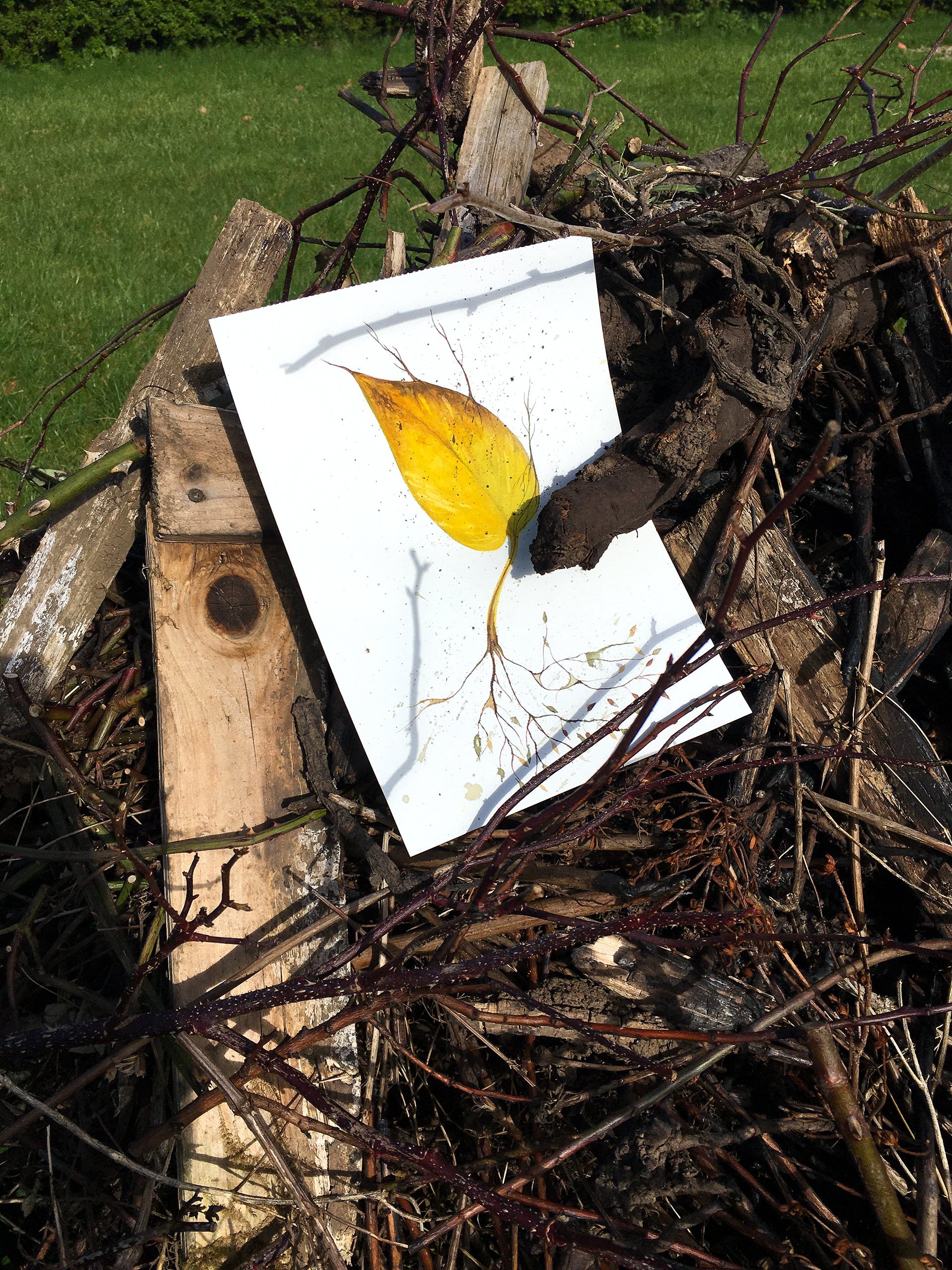
This body of work explores eco-philosophy through the lens of post-wildfire landscapes. This collection of paintings stands as a significant milestone in Vi Bell's artistic evolution.
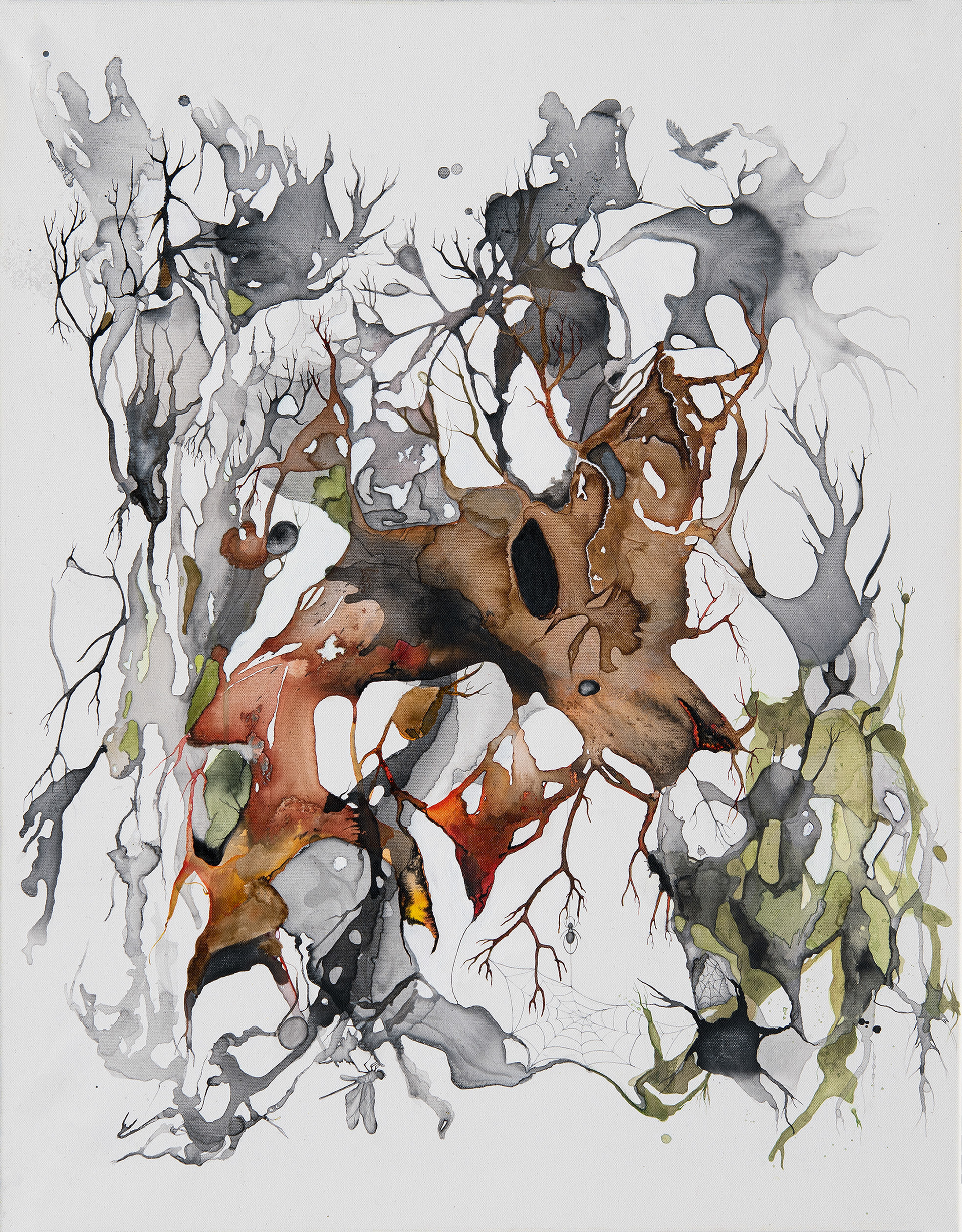
'Emergence', ink & charcoal wash on canvas, 70 cm x 90 cm
Artistic Influences
In the current body of work, the burnt tree forest evokes dreamlike surrealist landscapes reminiscent of Max Ernst, providing a stage for biomorphic nuances akin to Joan Miró's playful symbolism. The guided interplay of ink and charcoal wash, echoing Wu Guanzhong’s calligraphic landscapes, resonates with the autonomy of form pursued by Piet Mondrian's neoplastic ideals. The deliberate eradication of any human imprint in brushwork pays homage to the abstractionist purity advocated by Kandinsky, alongside the subtle, earthy hues explored by Georgia O'Keeffe in organic abstraction. Underpinning this visual language is a moment in the process that quietly acknowledges Helen Frankenthaler’s stain paintings, where dilution and absorption become agents of atmosphere rather than gesture. Through this nuanced fusion, the work initiates a visual dialogue that contemplates perpetual renewal, both in nature and in human experience.
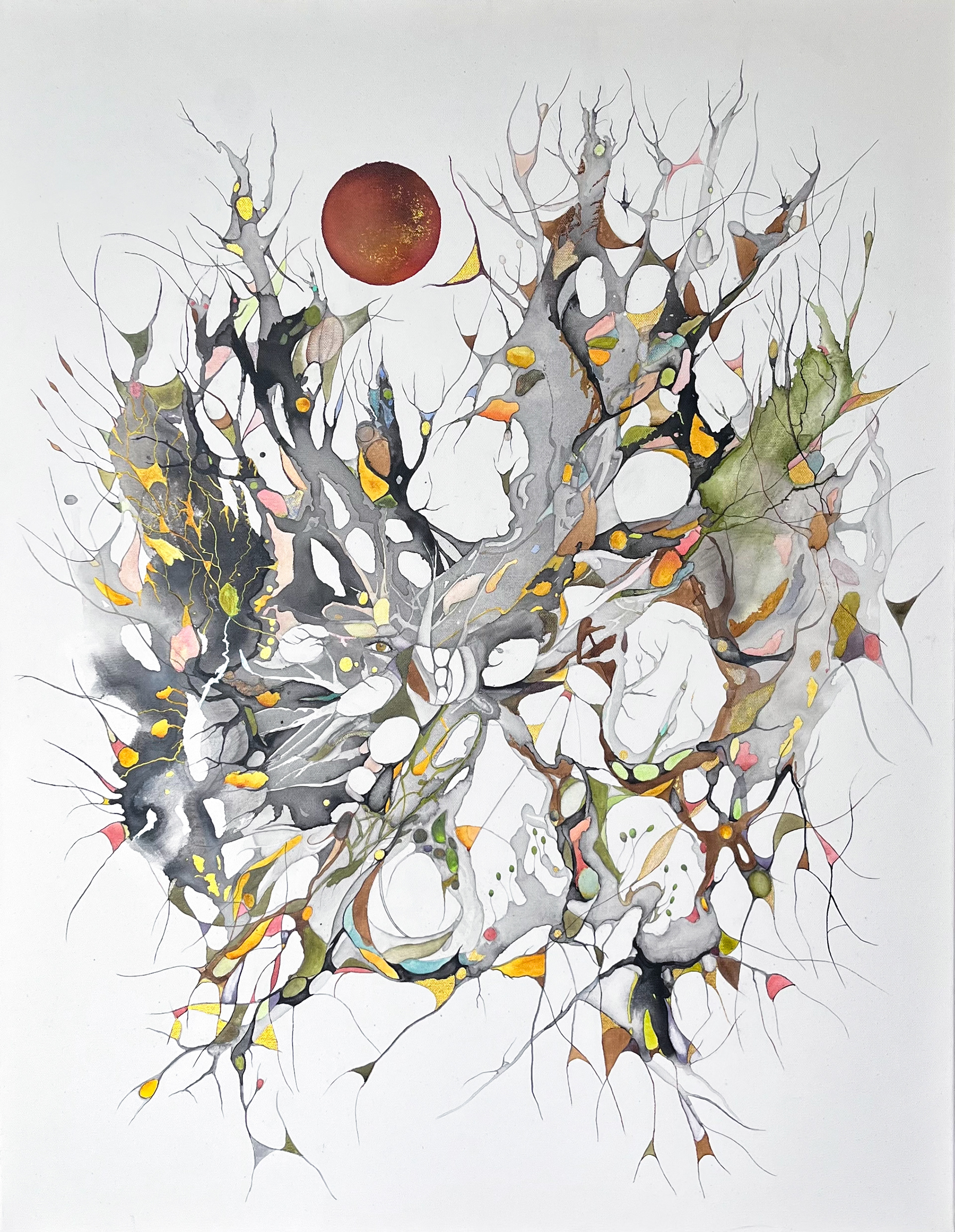
'Somnus', ink & charcoal wash on canvas, 70 cm x 90 cm
It all began with a charred tree discovered during a forest stroll. This tree, its branches sprawled like severed limbs, initially appeared lifeless. However, upon closer inspection, the artist unearthed a bustling ecosystem thriving amidst the scorched remains. Insects, amphibians, indigenous wildflowers, and grasses had ingeniously found a foothold amid the desolation. Capturing this revelation through a series of macro photographs, Bell employed them as a reference for her studio work.
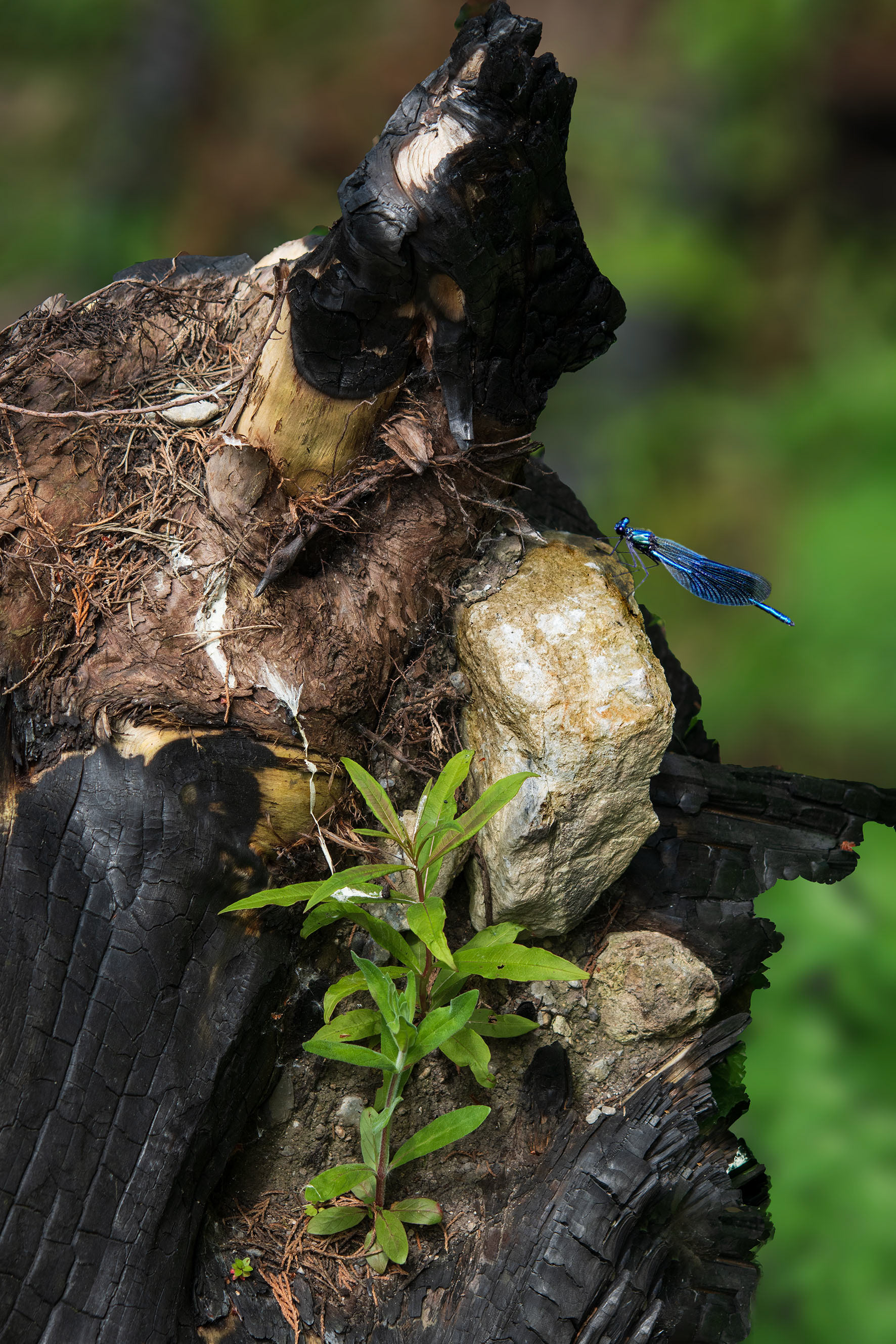
Photo by Vi Bell
For the discerning eye, this ecological choreography serves as a profound metaphor for the perpetual dance of life and death transcending both nature and human existence. It acts as a sobering reminder of our transient presence on this planet juxtaposed against the enduring vitality of nature.
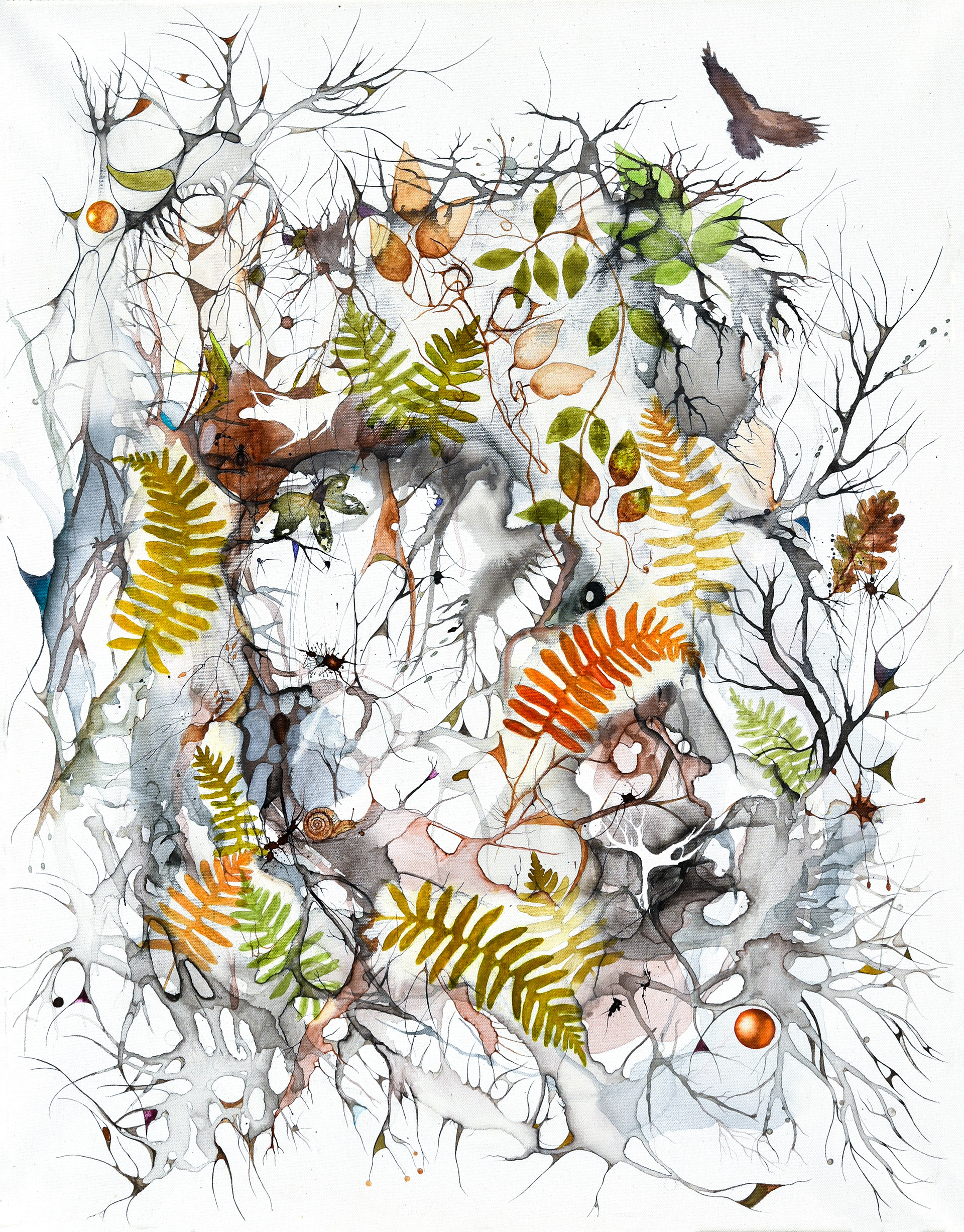
'Habitat'
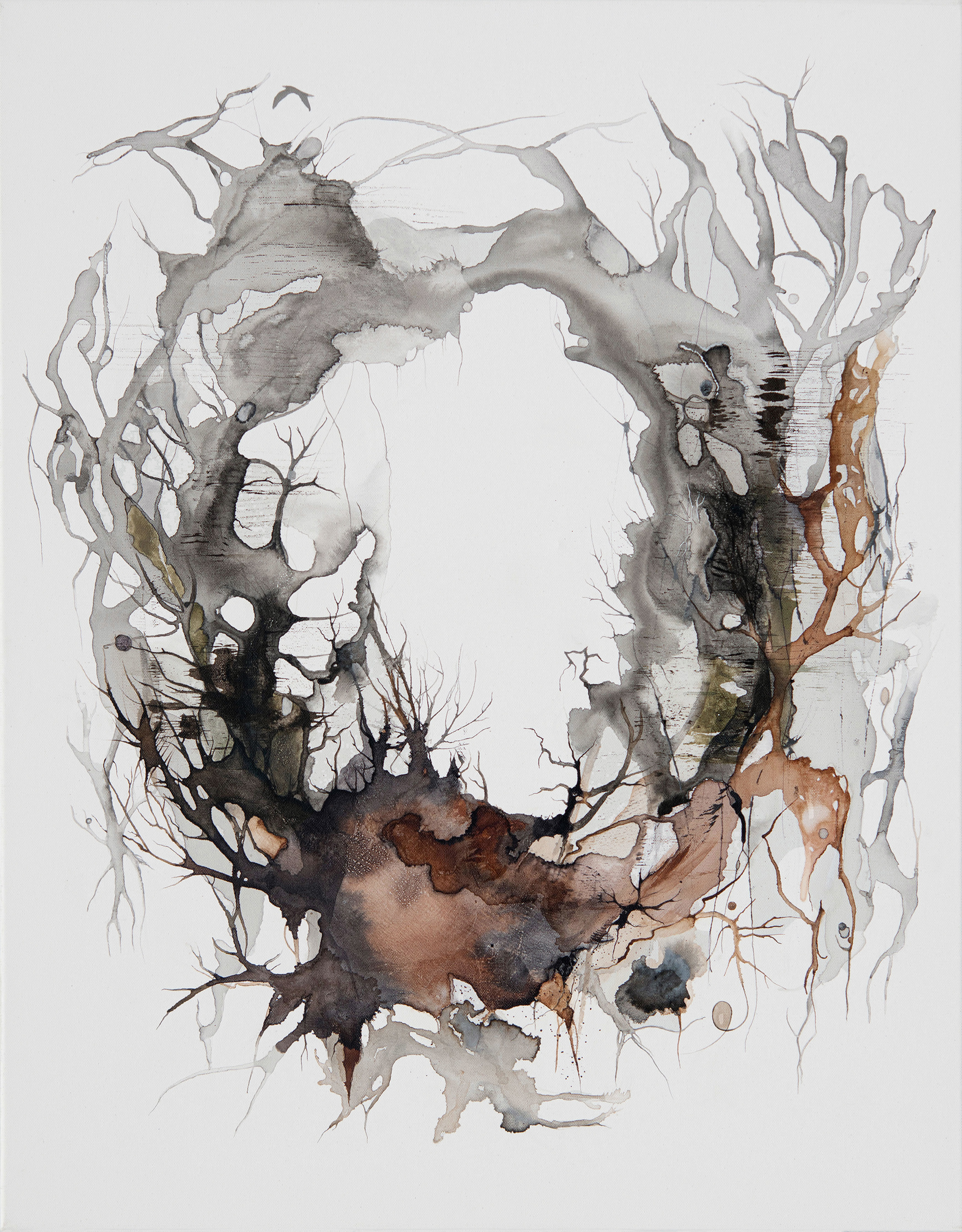
'Forma Vitalis'
Method and Process
Drawing upon charcoal harvested from that very tree, ink, and a copious amount of water, Bell seemingly attempts to quench the flames that once ravaged the landscape. Granting water a remarkable degree of creative autonomy, the artist views it as a collaborator imbued with its own agency, fostering an embrace of serendipity within her artistic process. Though collaborative in nature, the painting itself assumes a distinct will.
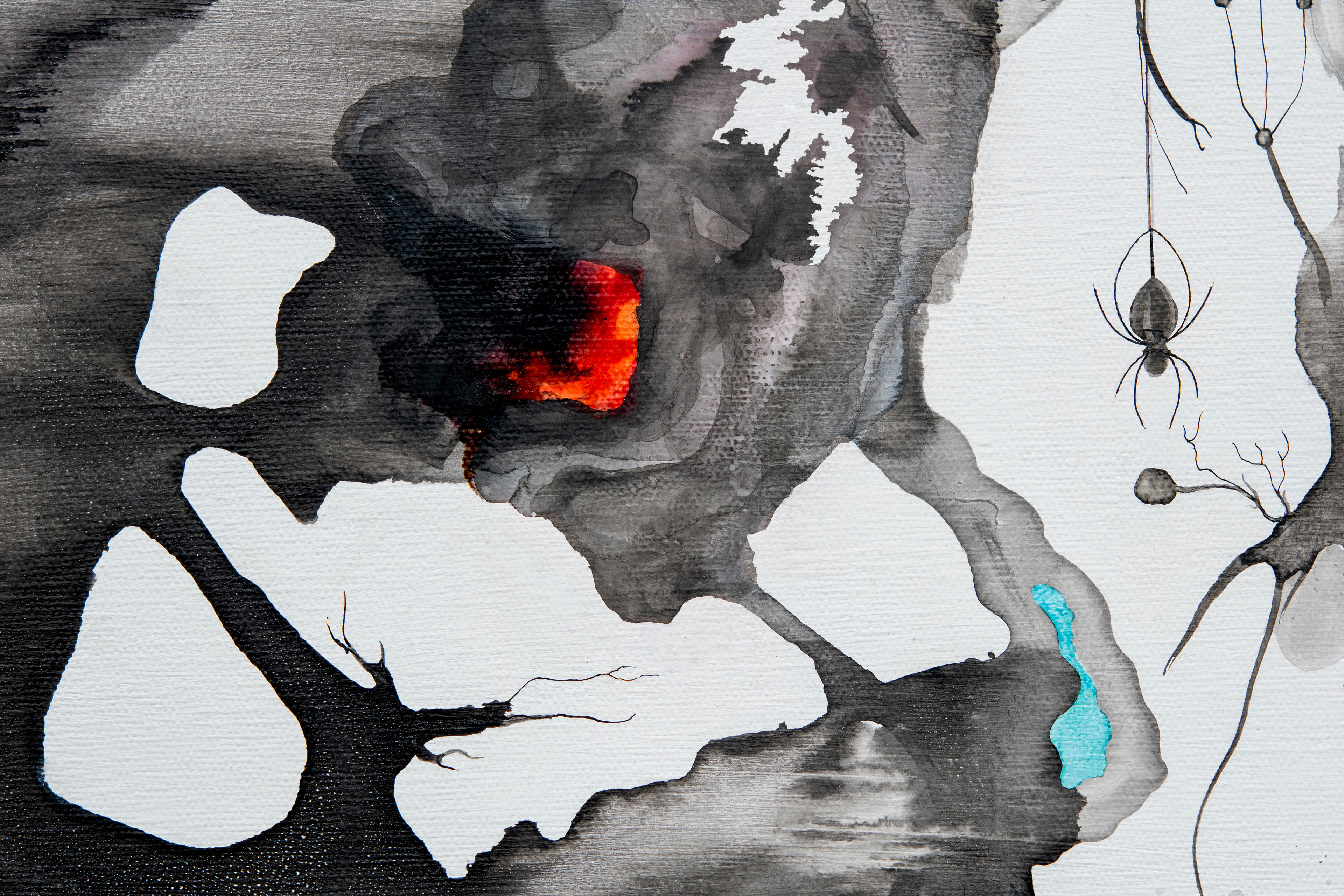
'Aftermath', detail
When delineating tree branches or other organic forms, the artist seeks to leave no discernible brushstrokes, striving to remove any trace of human intervention from the body of the painting.
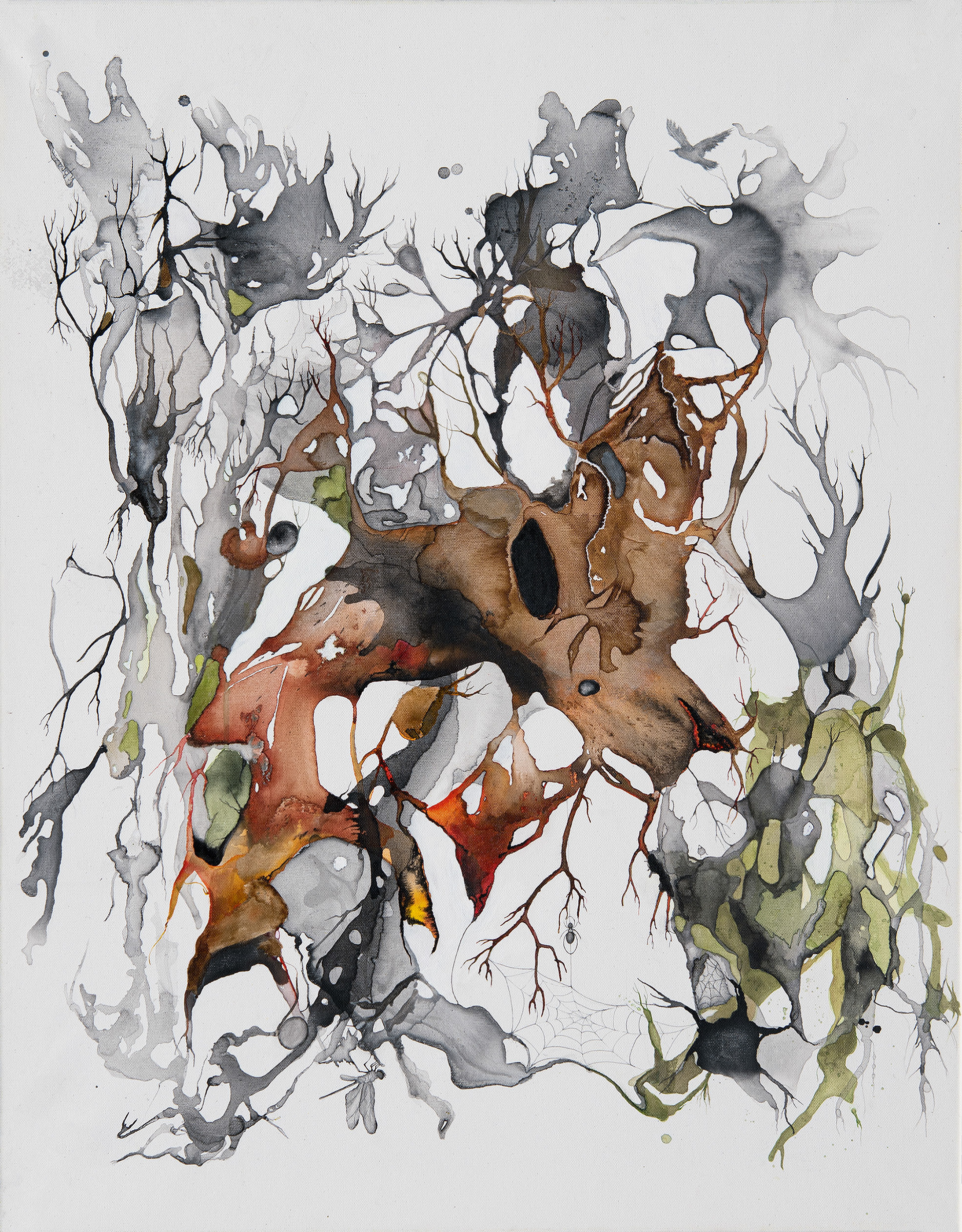
'Emergence', ink & charcoal wash on canvas, 70 x 90 cm / 27 x 35 in
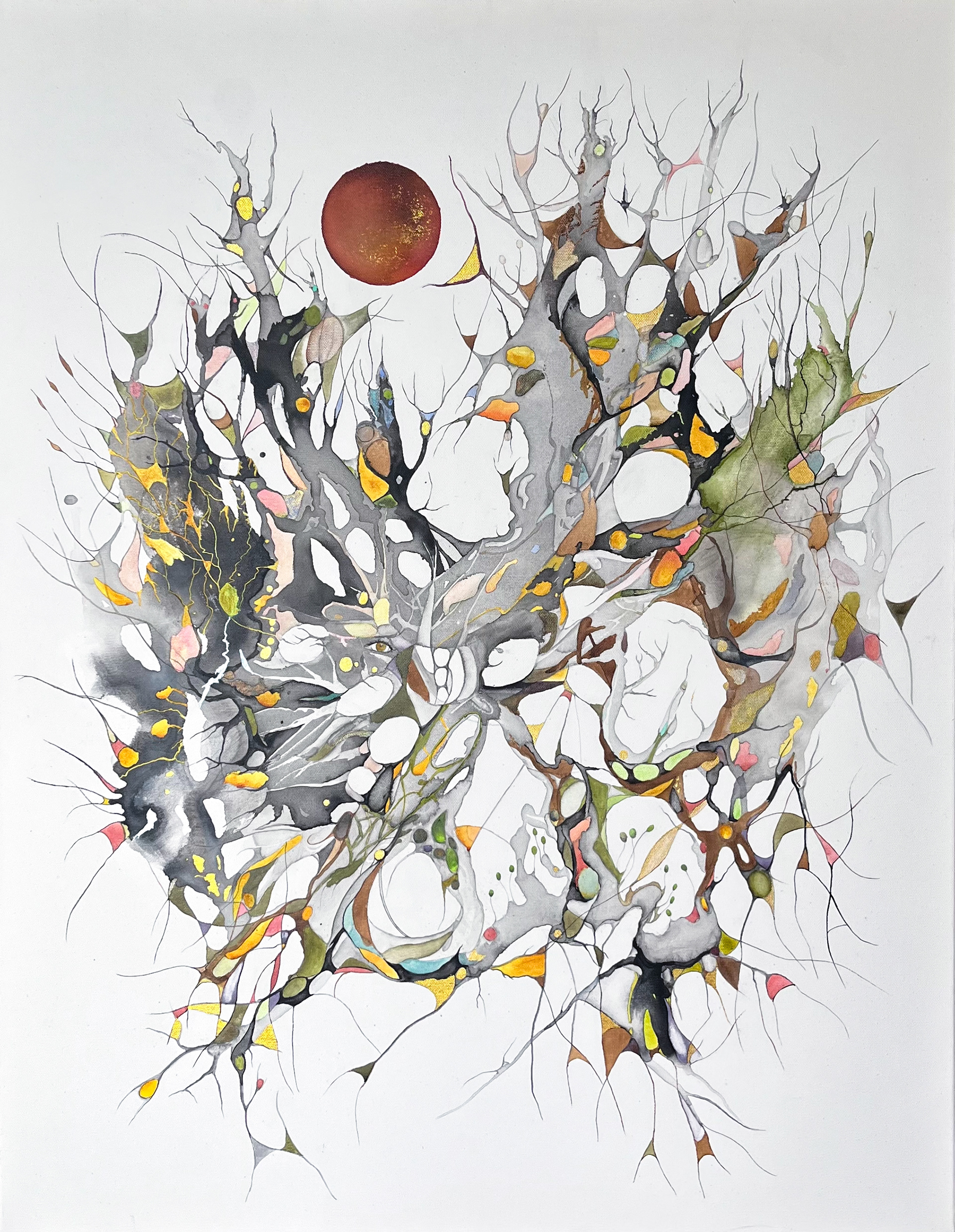
'Rootrise', ink & charcoal wash on canvas, 70 x 90 cm / 27 x 35 in
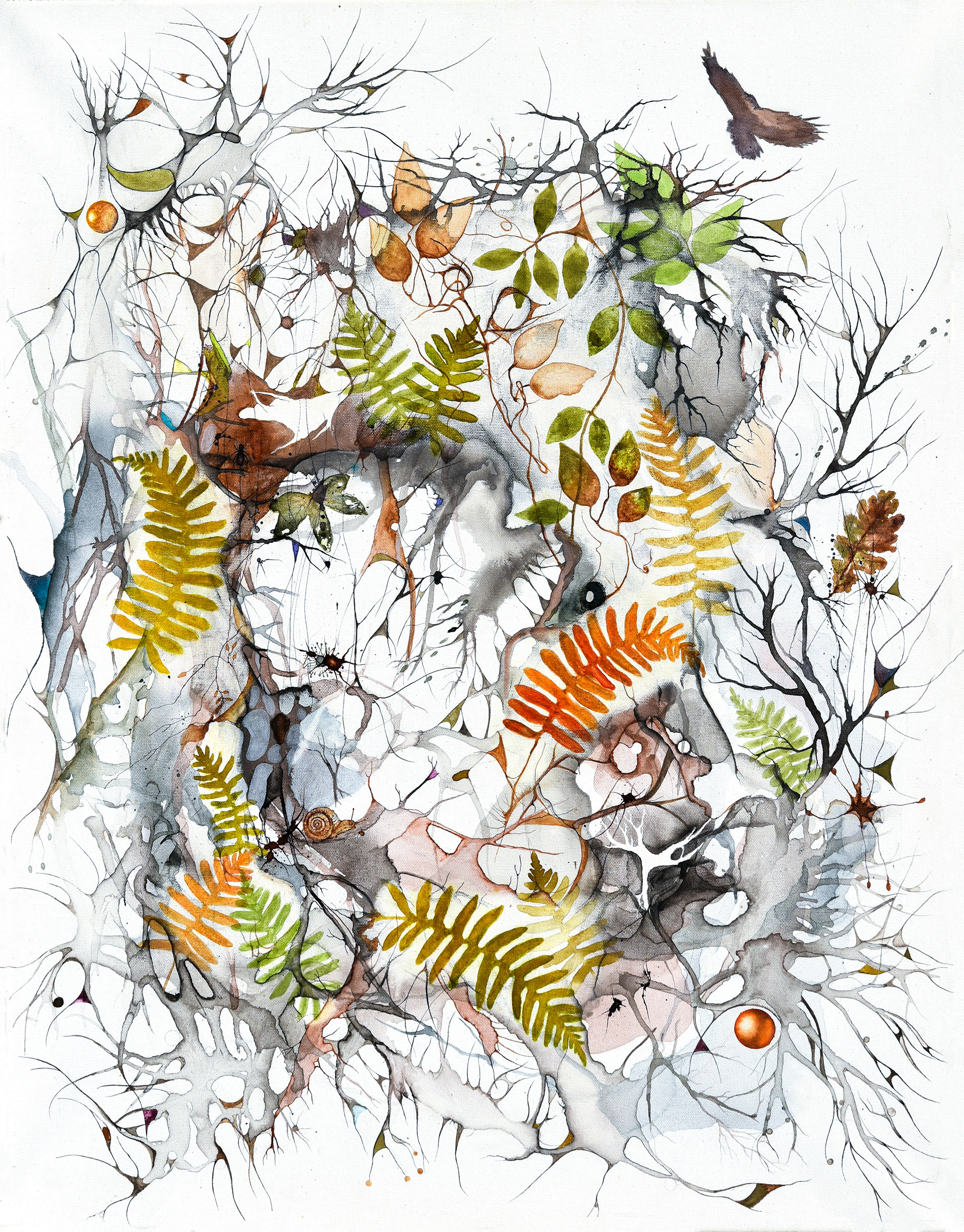
'Habitat, ink & charcoal on canvas, 70 x 90 cm / 27 x 35 in'
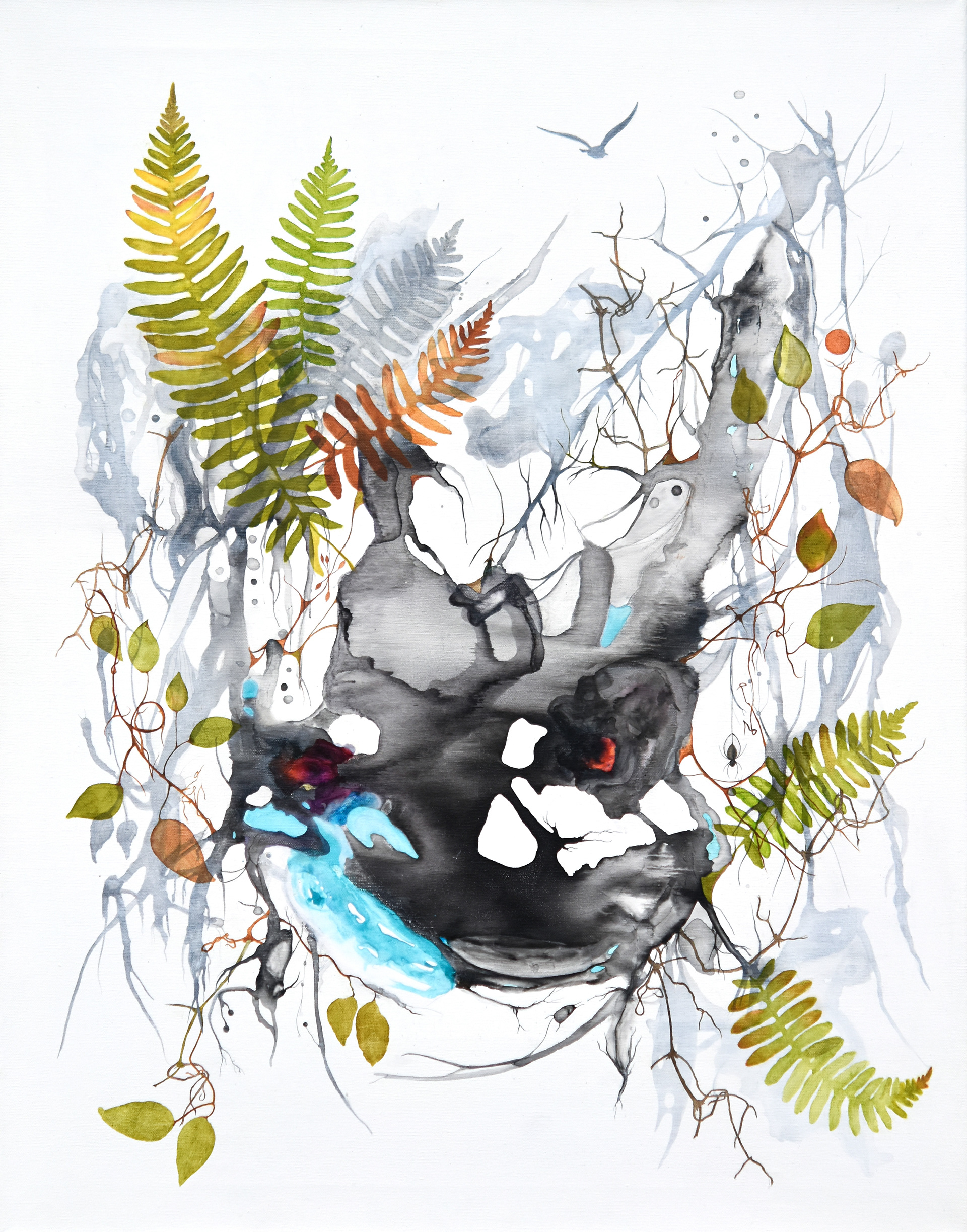
'Aftermath', ink & charcoal wash on canvas, 70 x 90 cm / 27 x 35 in
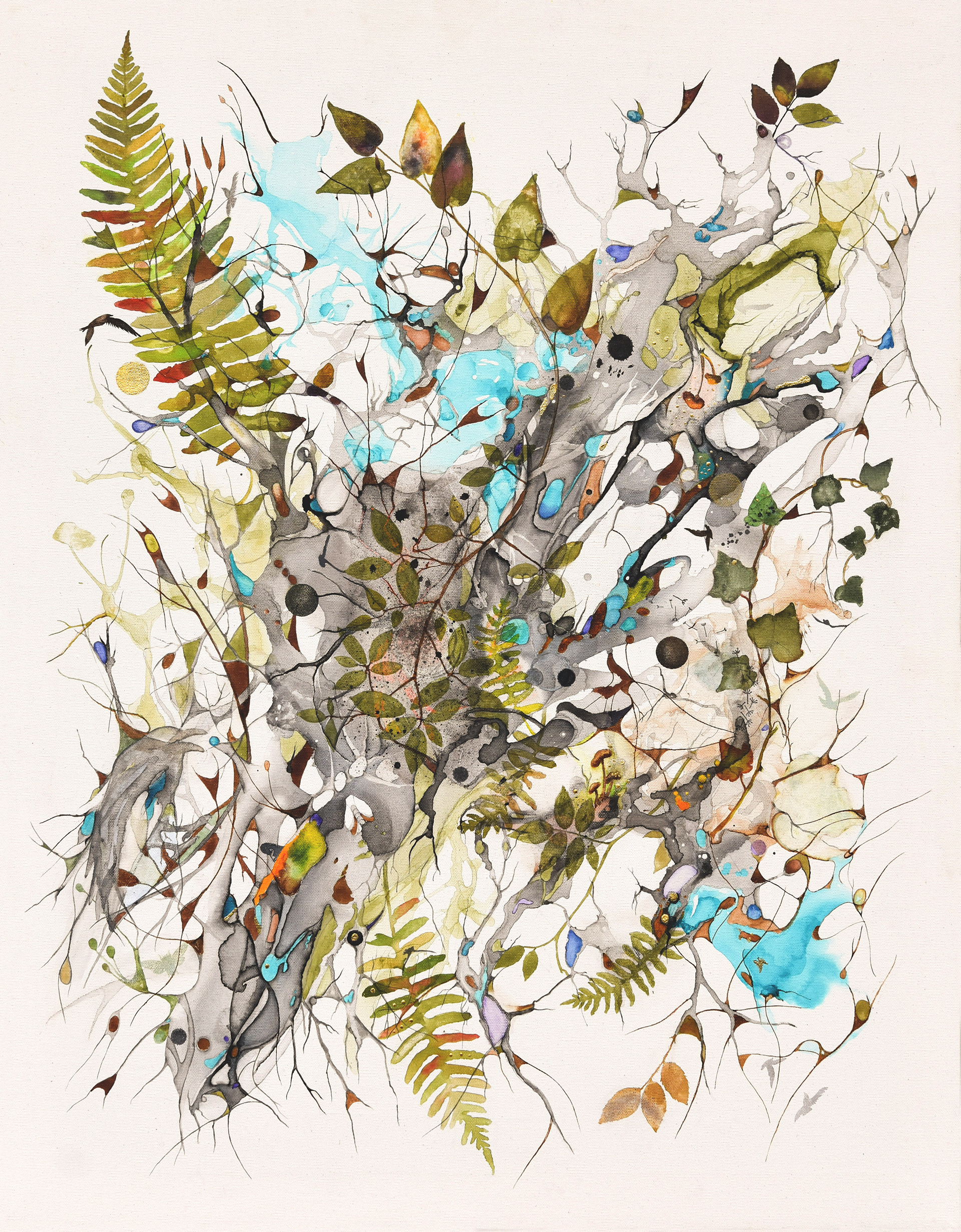
'Life Shoots Through', ink, charcoal, gold leaf on canvas, 70 x 90 cm / 27 x 35 in
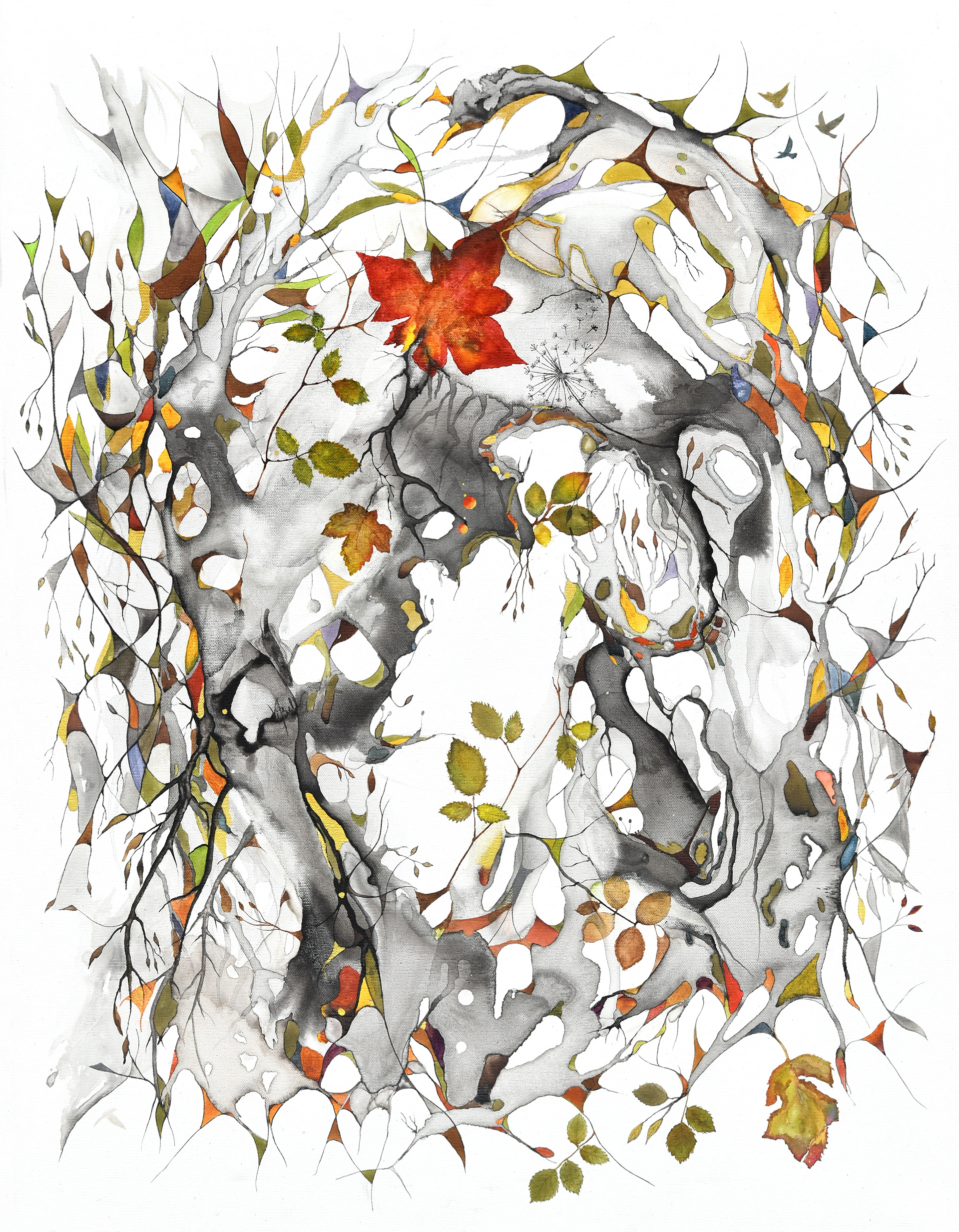
'Ash and Flame', ink & charcoal wash on canvas, 70 x 90 cm / 27 x 35 in
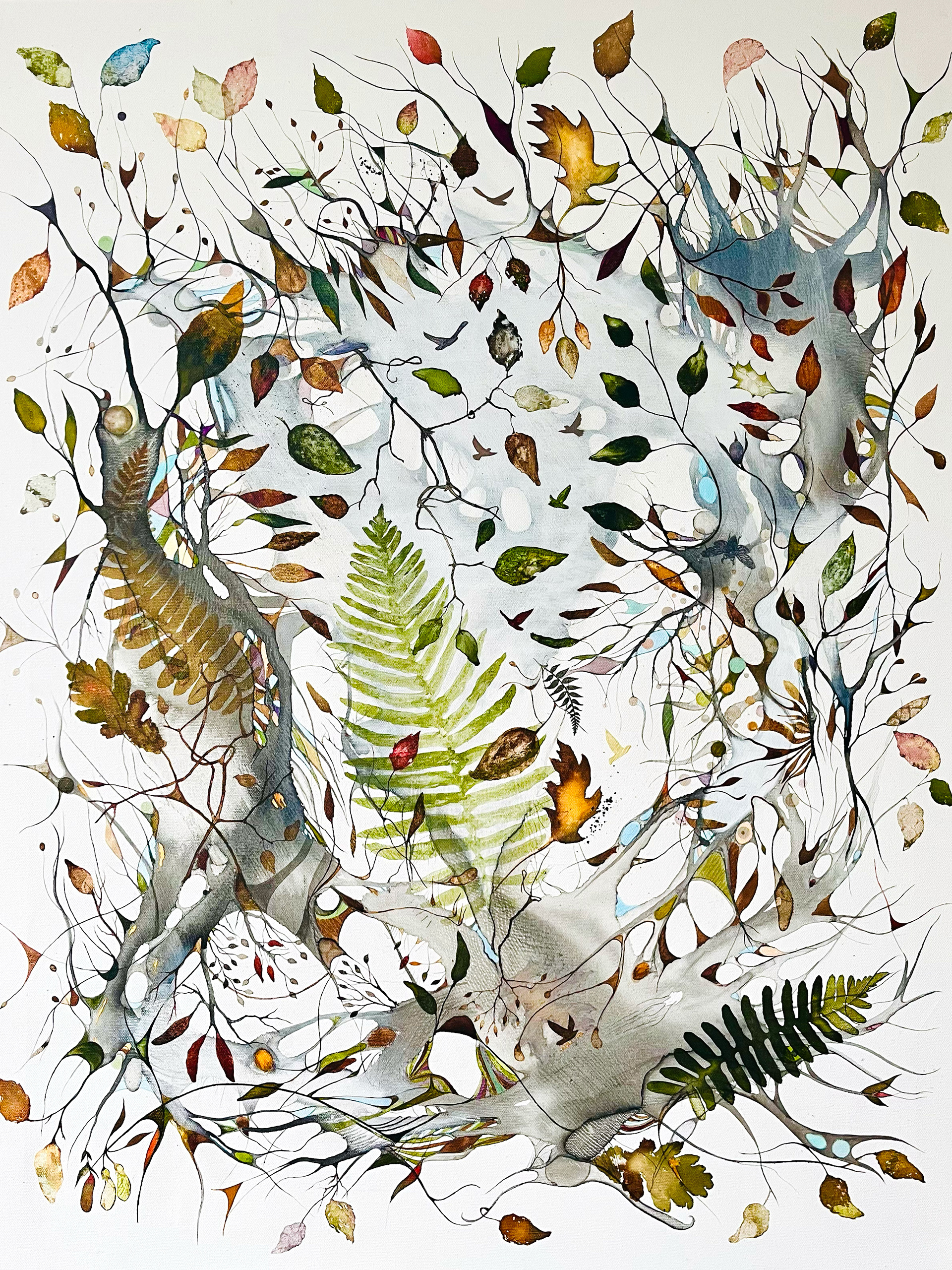
'Murmur', ink & charcoal wash on canvas, 70 x 90 cm / 27 x 35 in
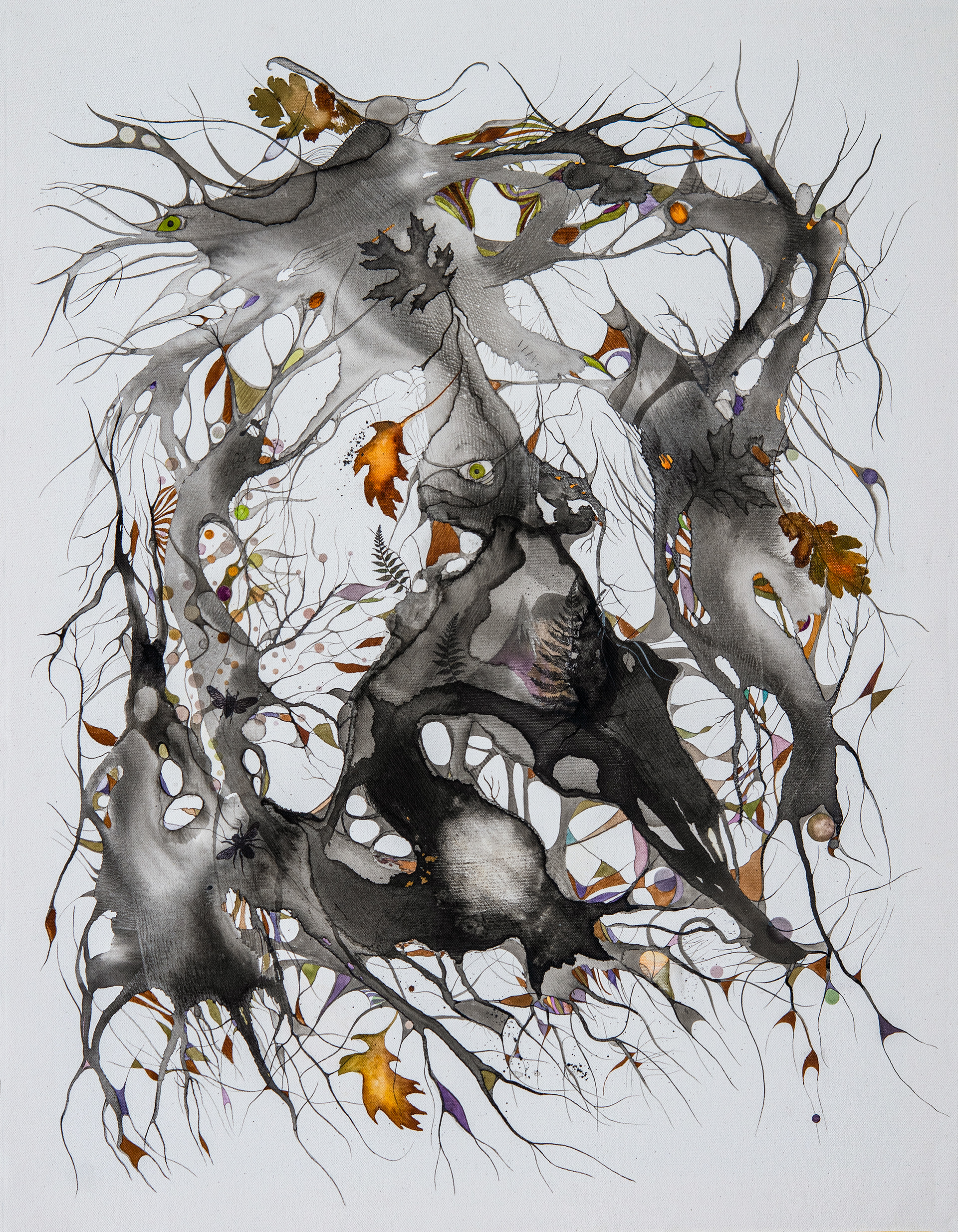
'Drift', ink & charcoal wash on canvas, 70 x 90 cm / 27 x 35 in

'Forma Vitalis', ink & charcoal wash on canvas, 70 x 90 cm / 27 x 35 in
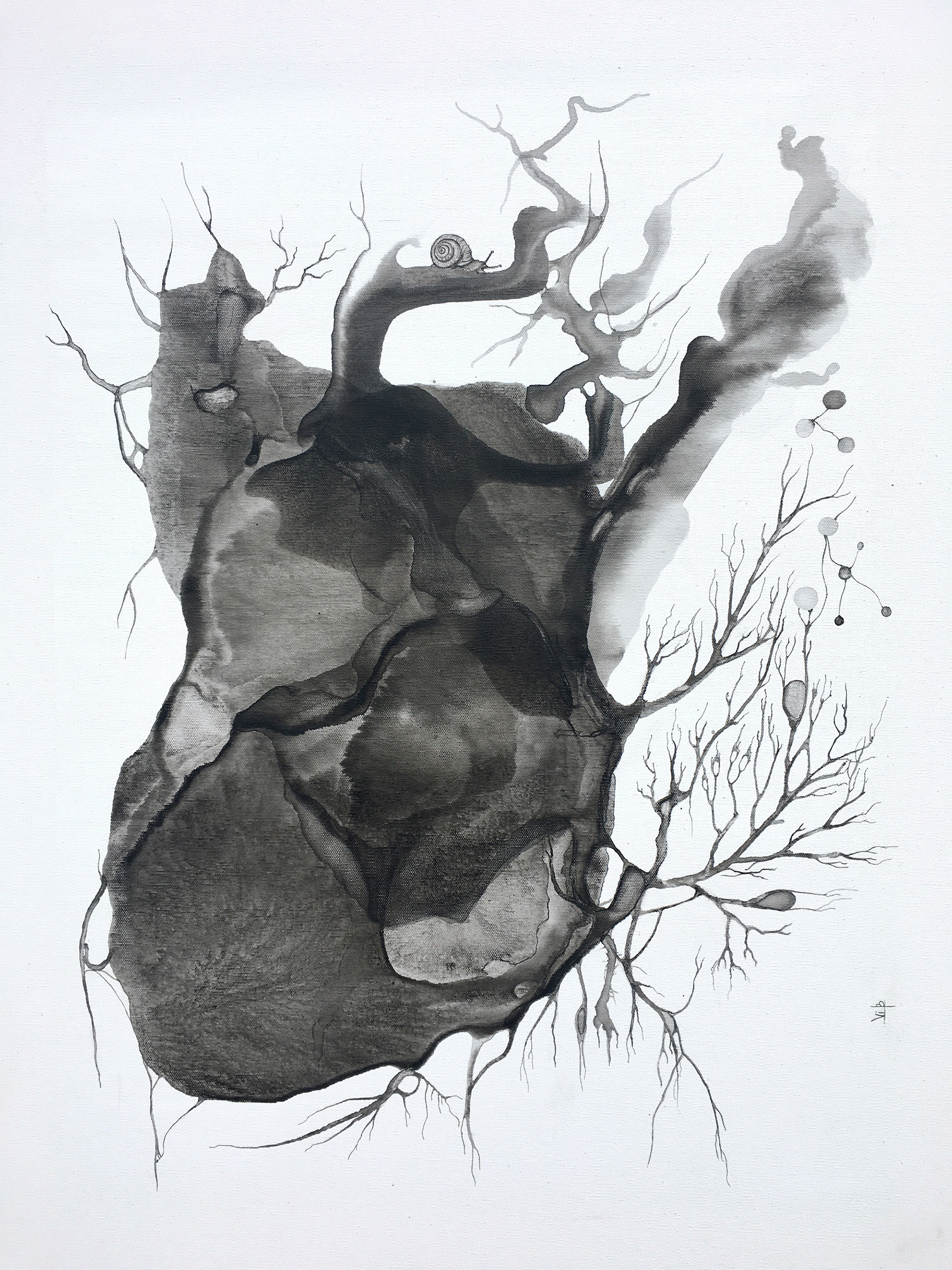
'Vessel', ink & charcoal wash on canvas, 70 x 90 cm / 27 x 35 in
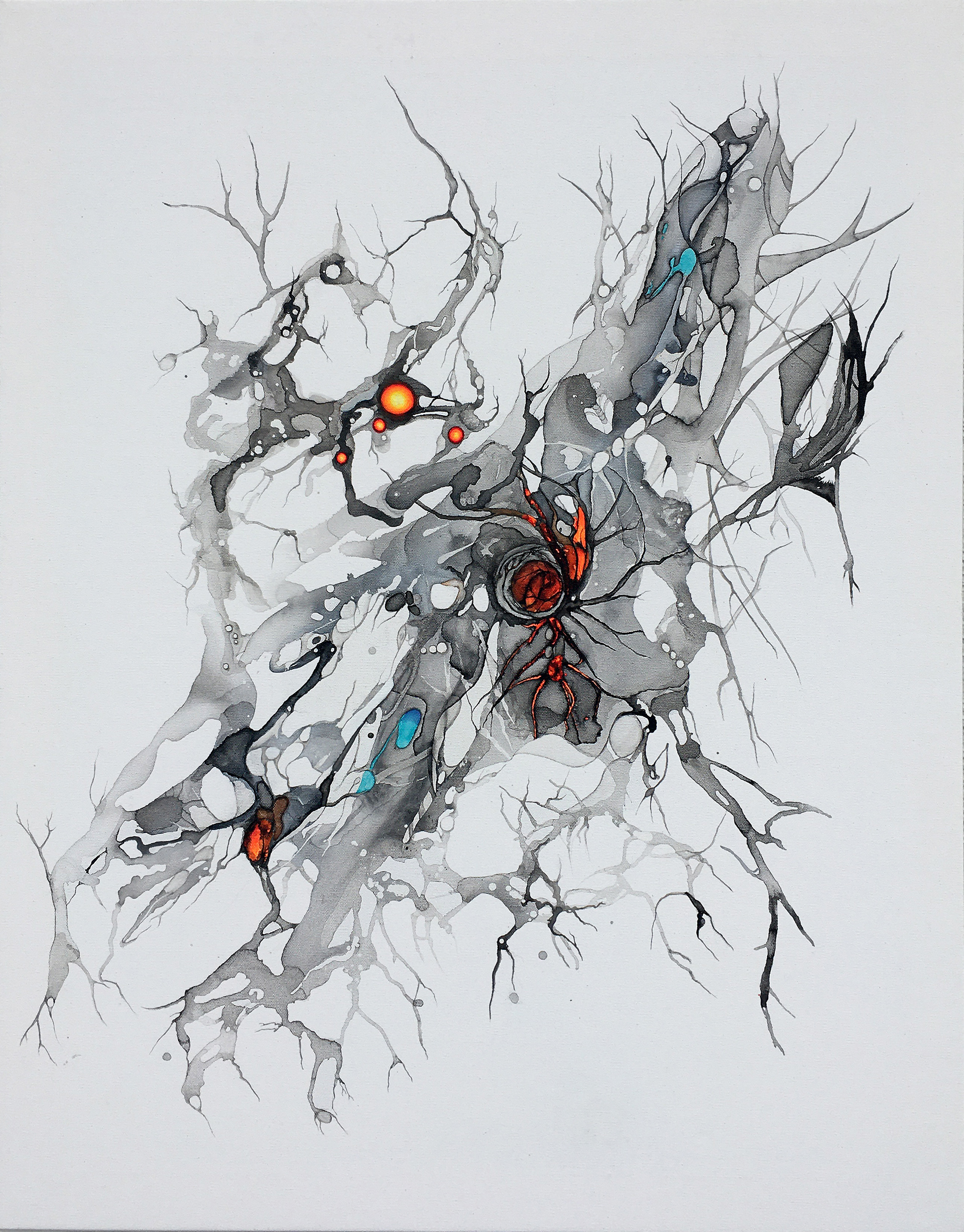
'Agni', ink & charcoal wash on canvas, 70 x 90 cm / 27 x 35 in
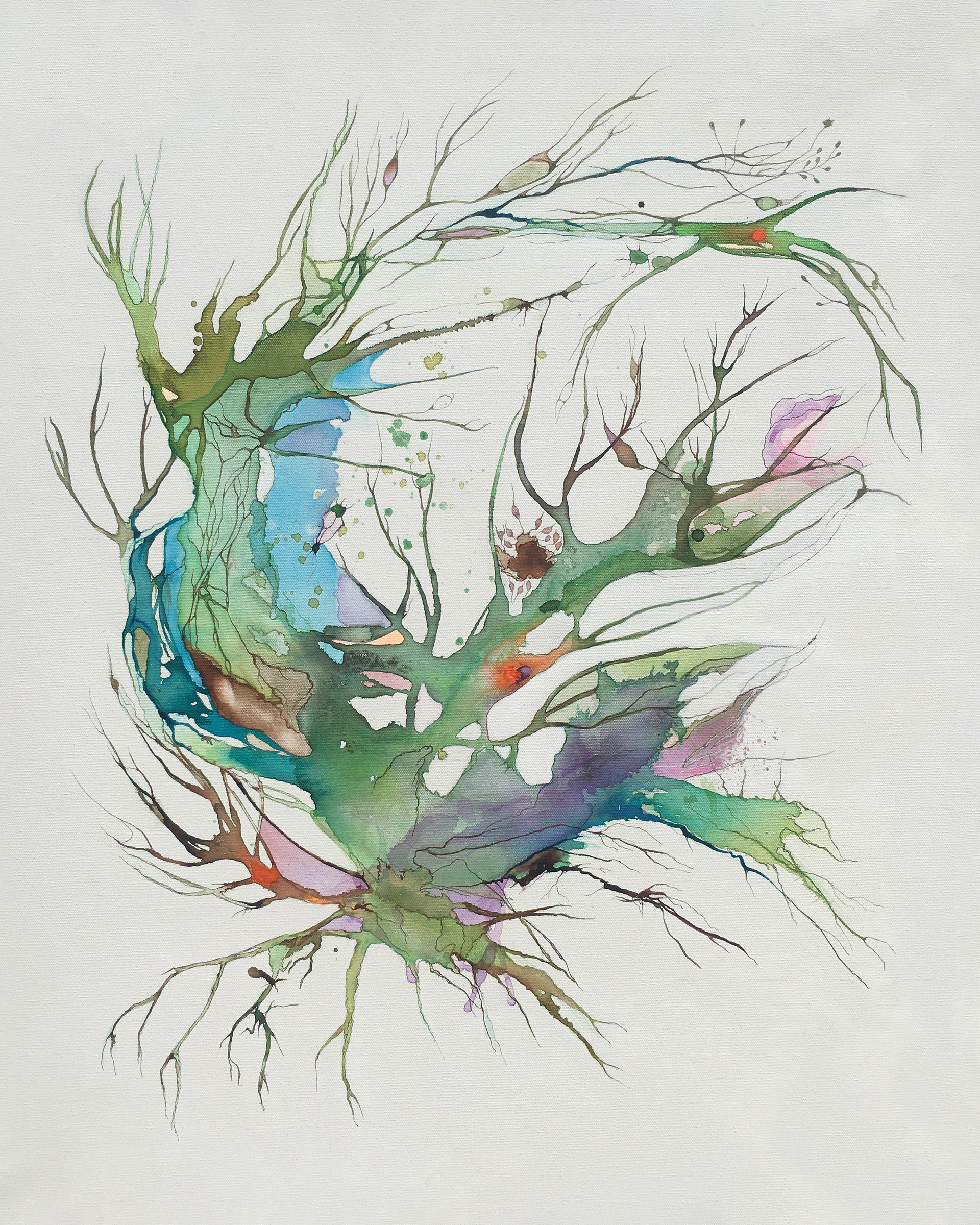
'Verdant Alchemy', ink on canvas, 60 x 76 cm / 24 x 30 in
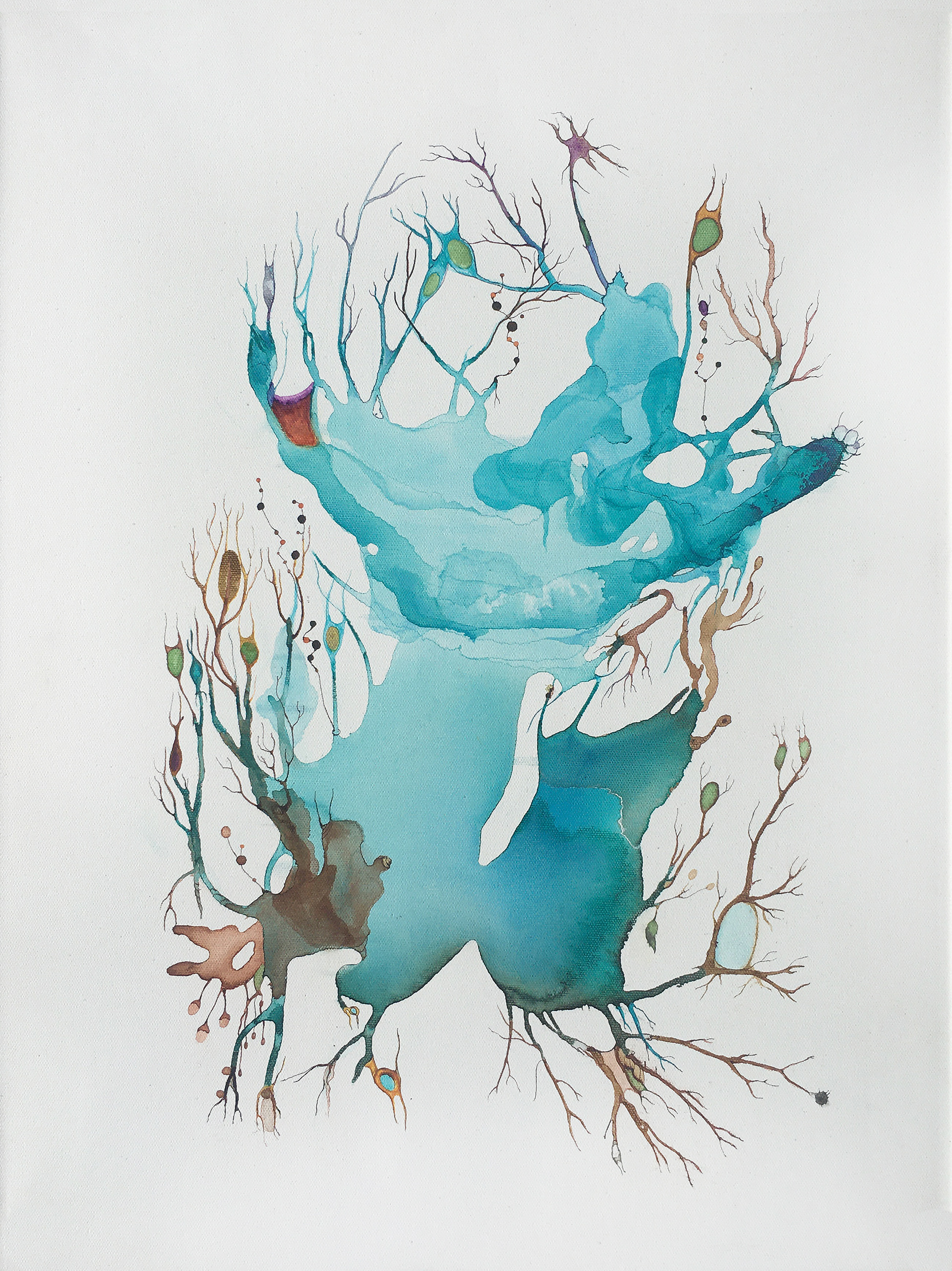
'Waterborn', ink on canvas, 45 x 60 cm / 18 x 24 in
Framed view in interior
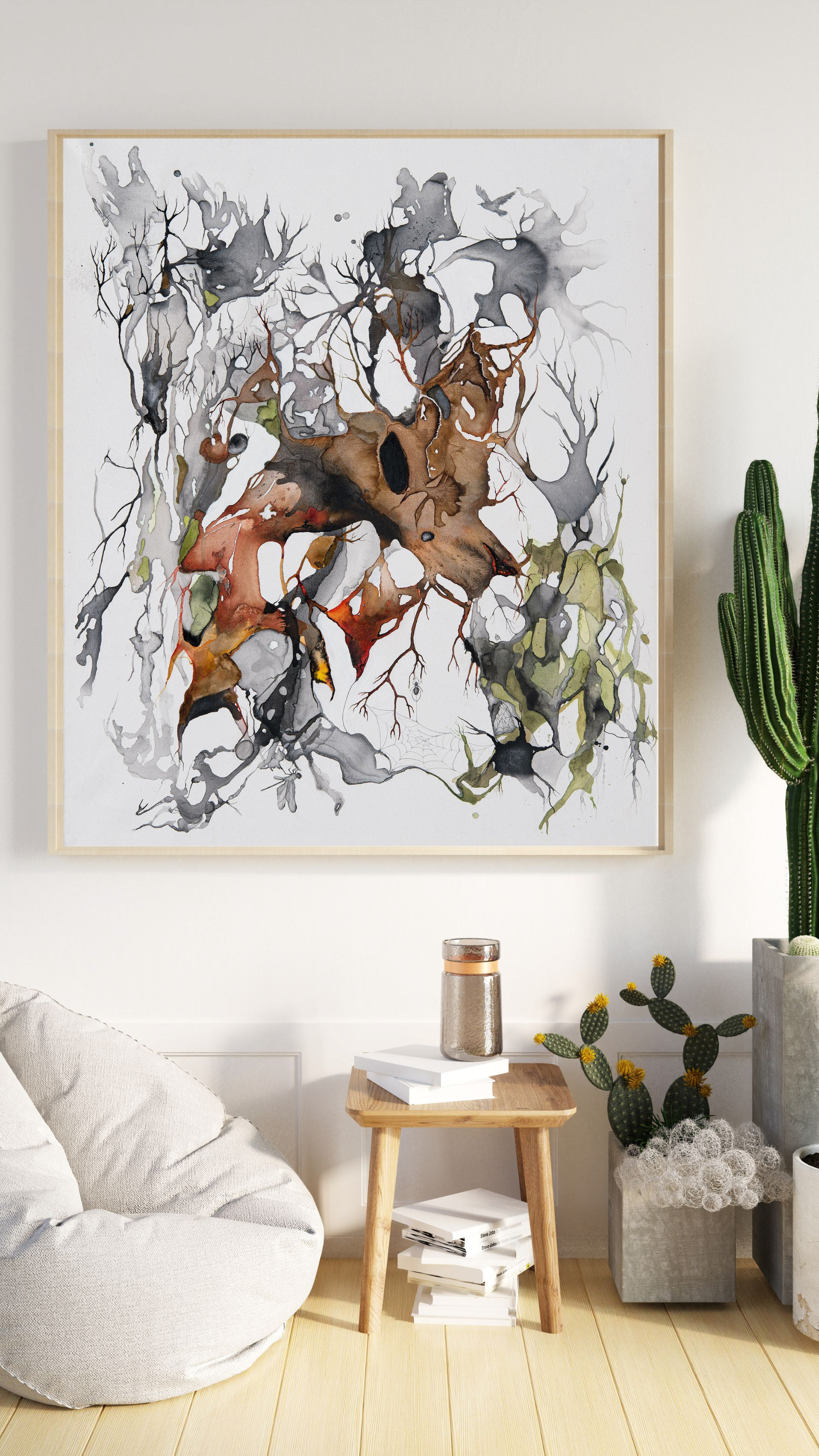
Emergence
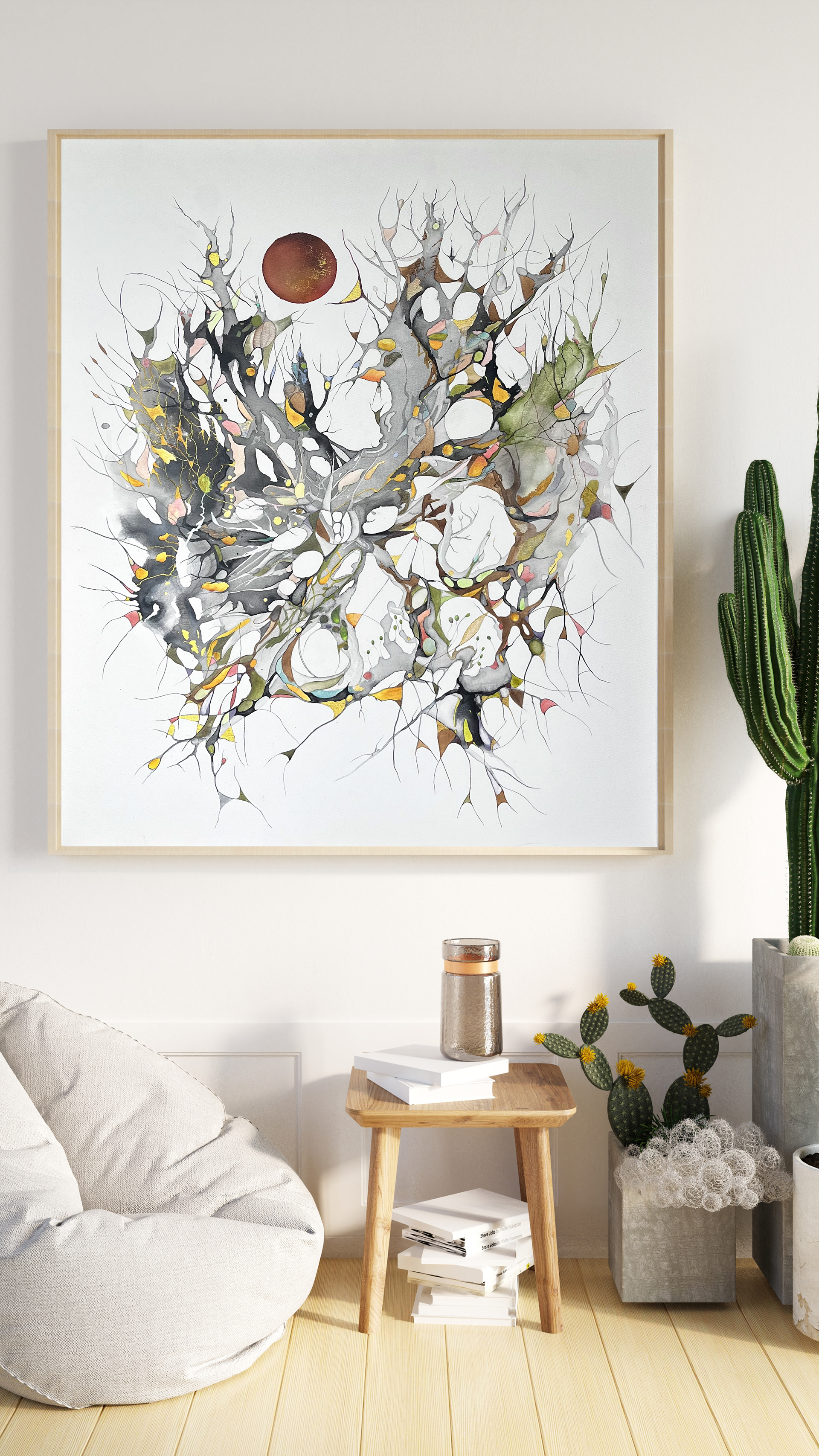
Rootrise
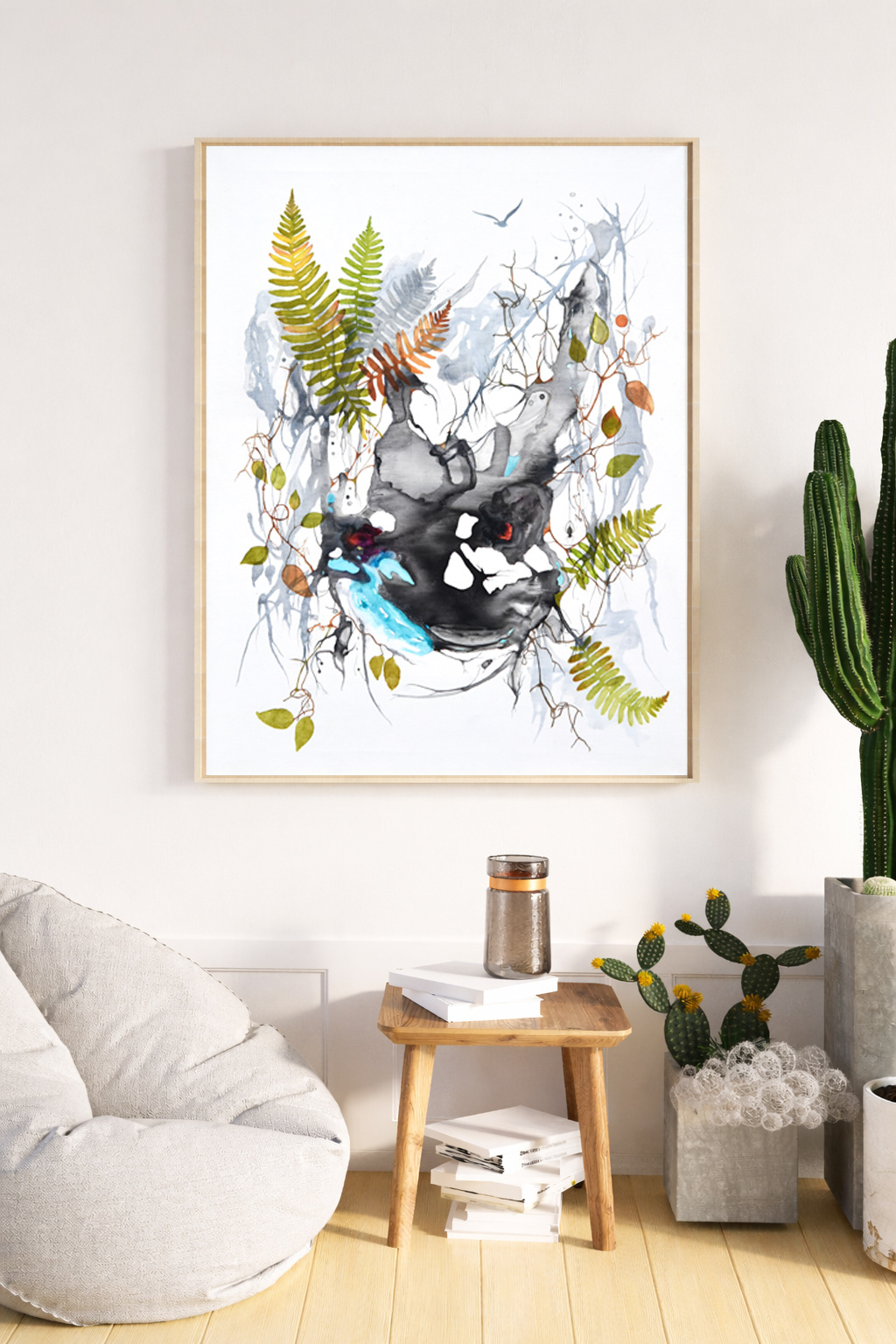
Afttermath
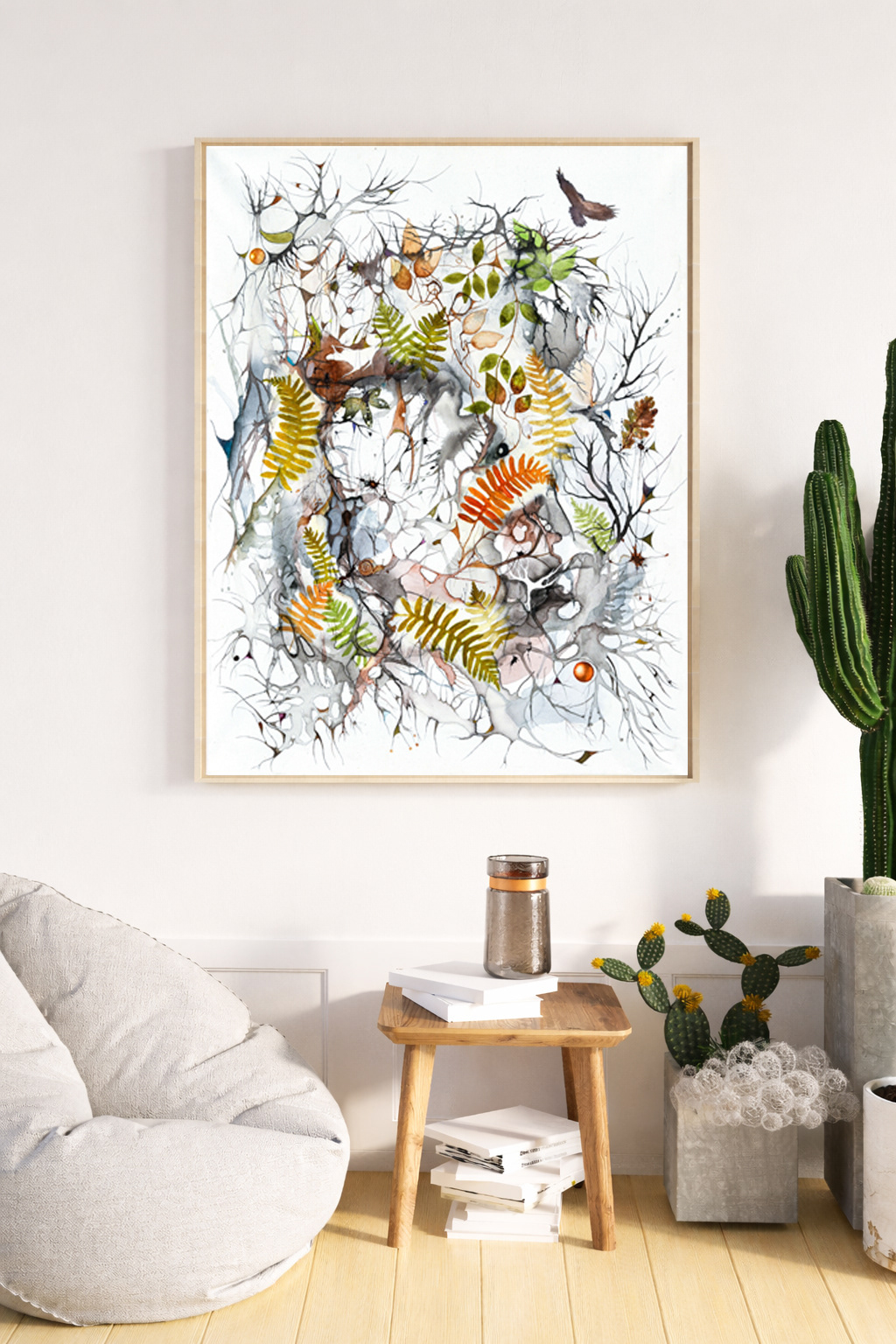
Habitat
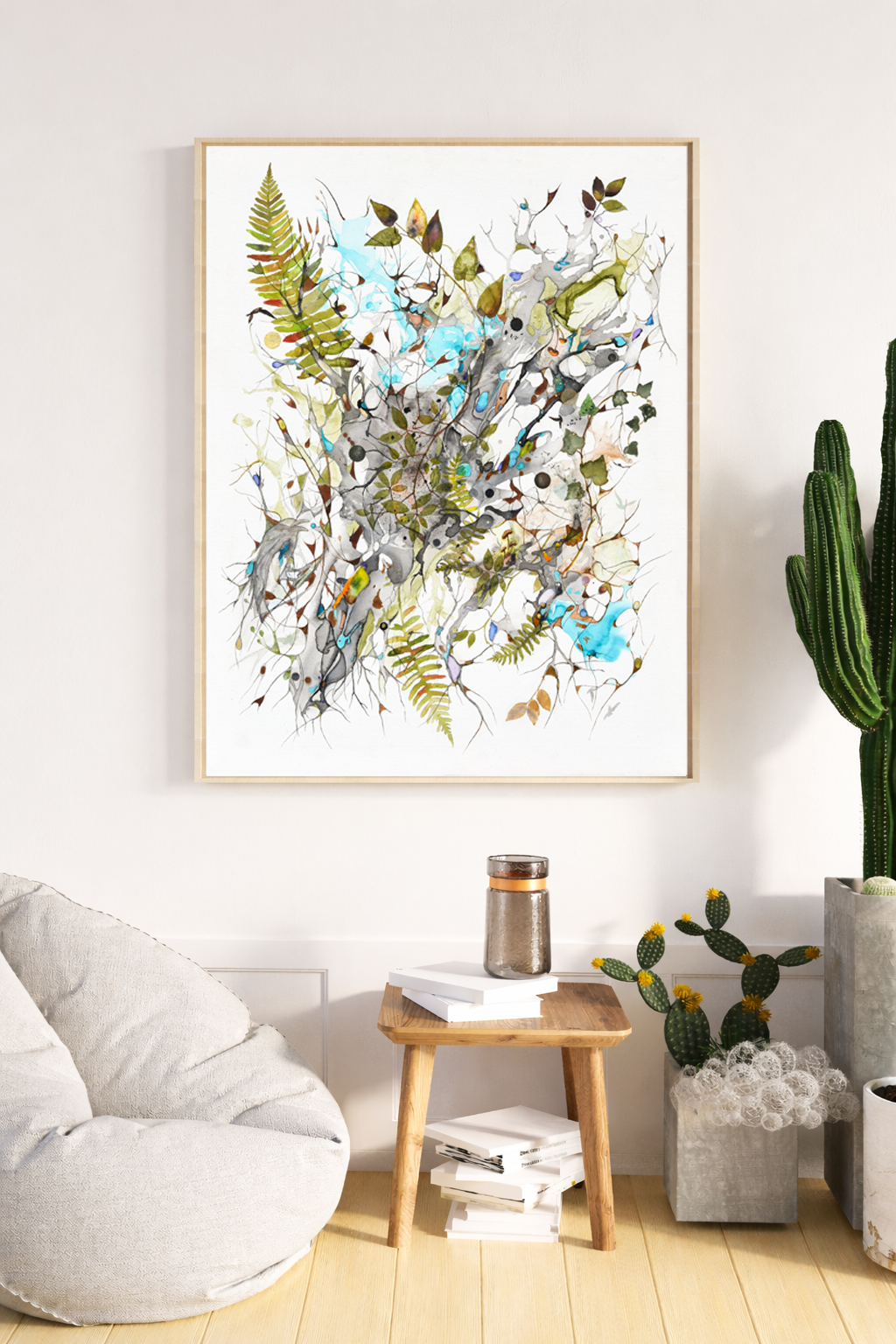
Life Shoots Through
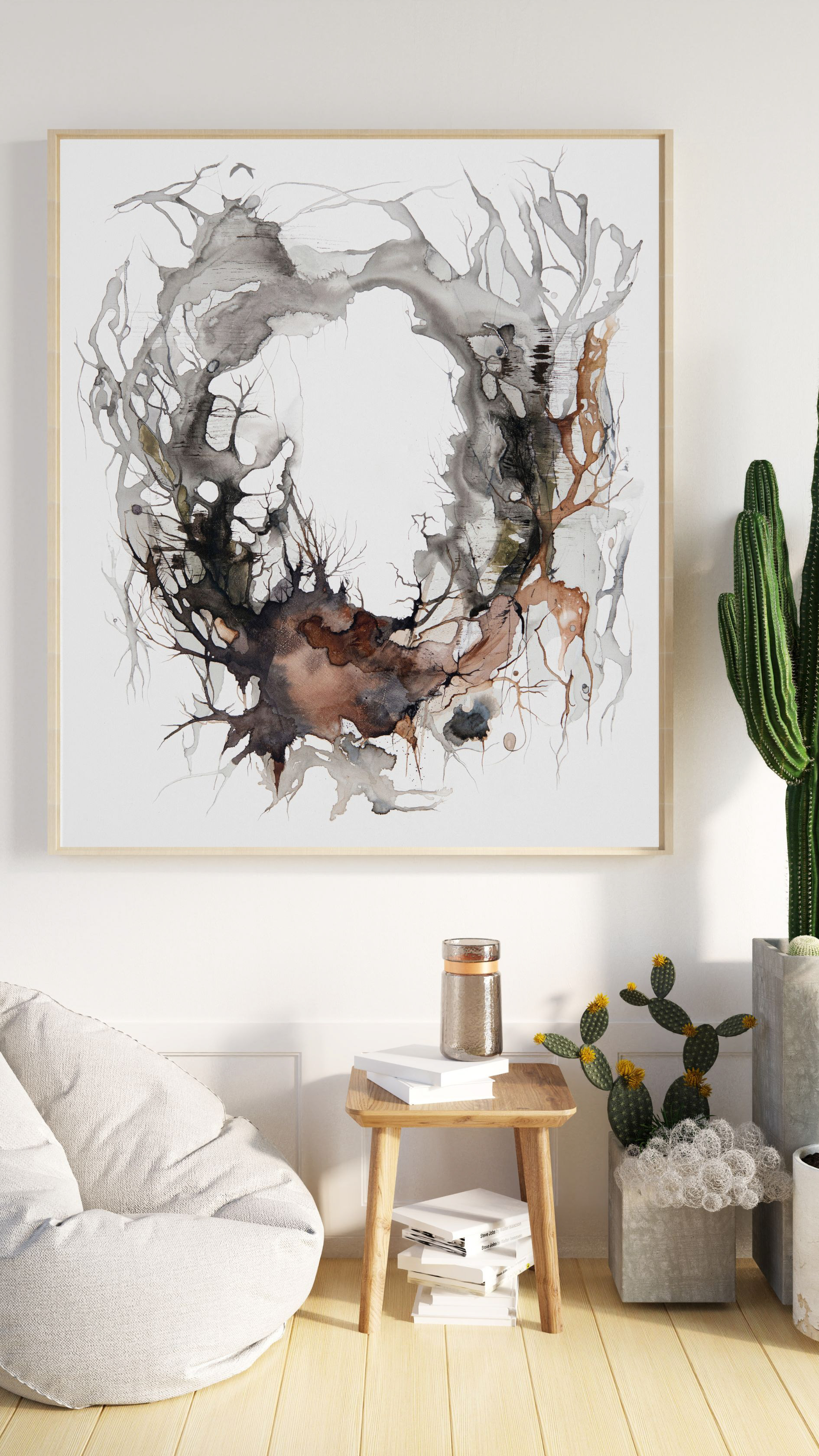
Forma Vitalis
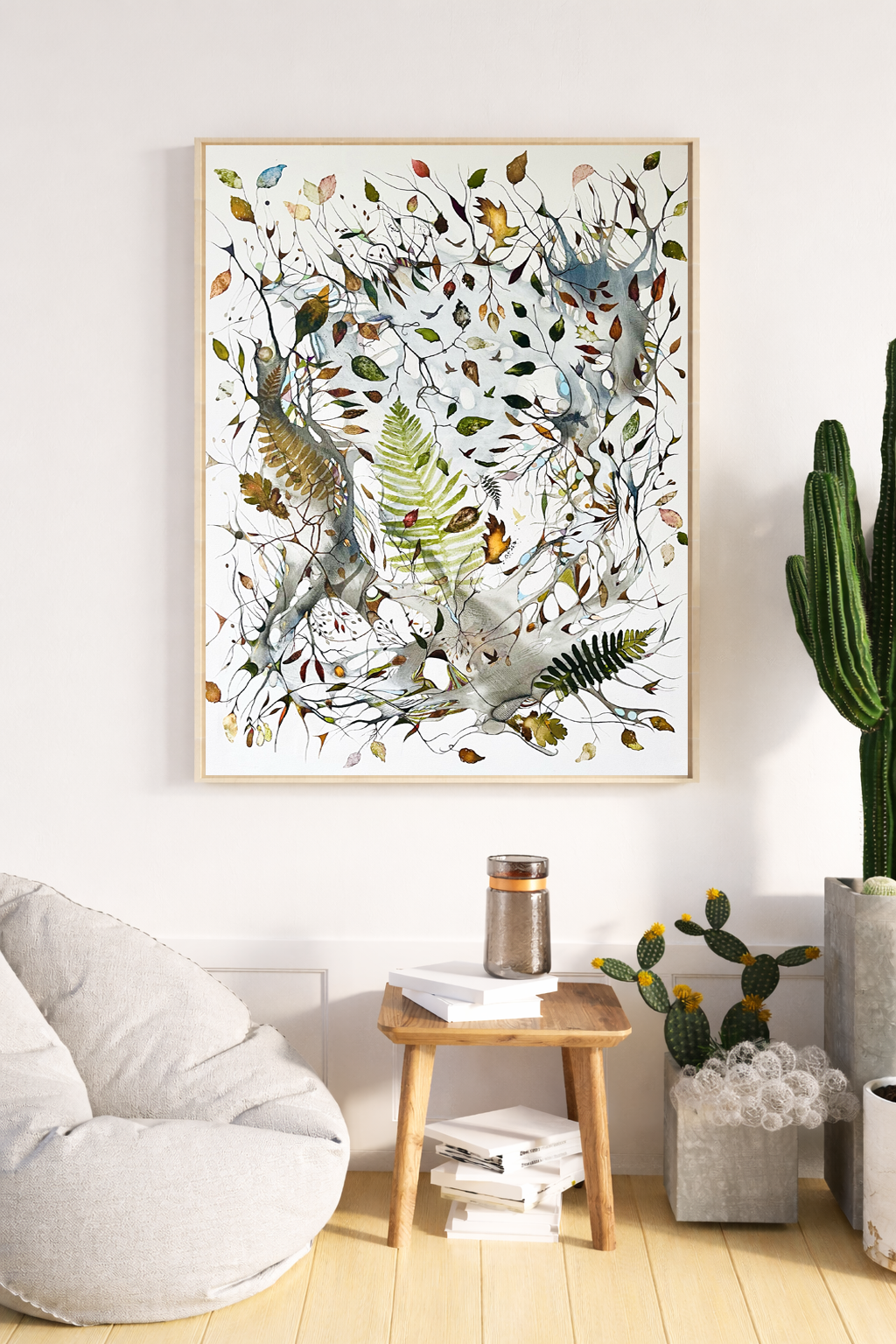
Murmur
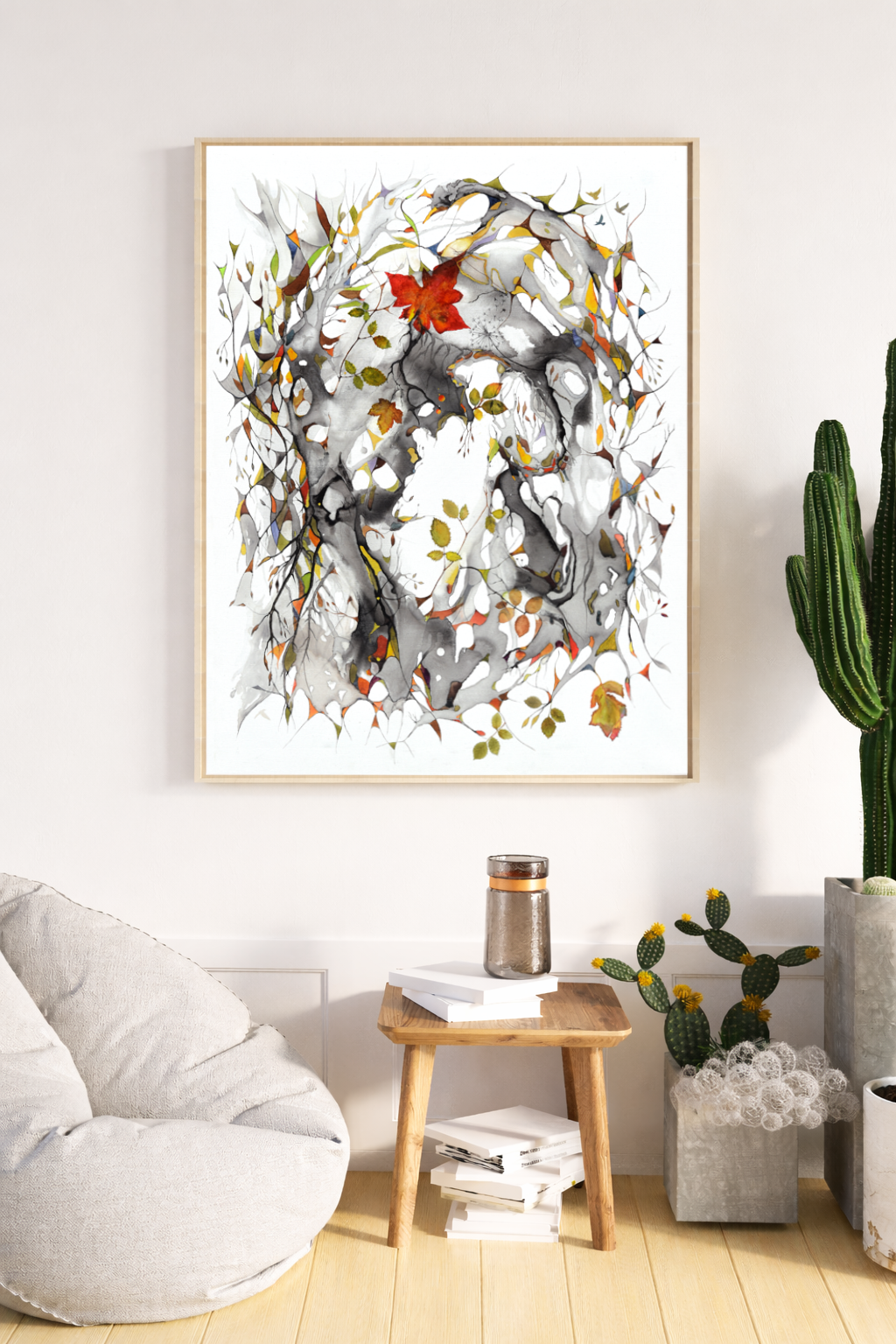
Ash & Flame
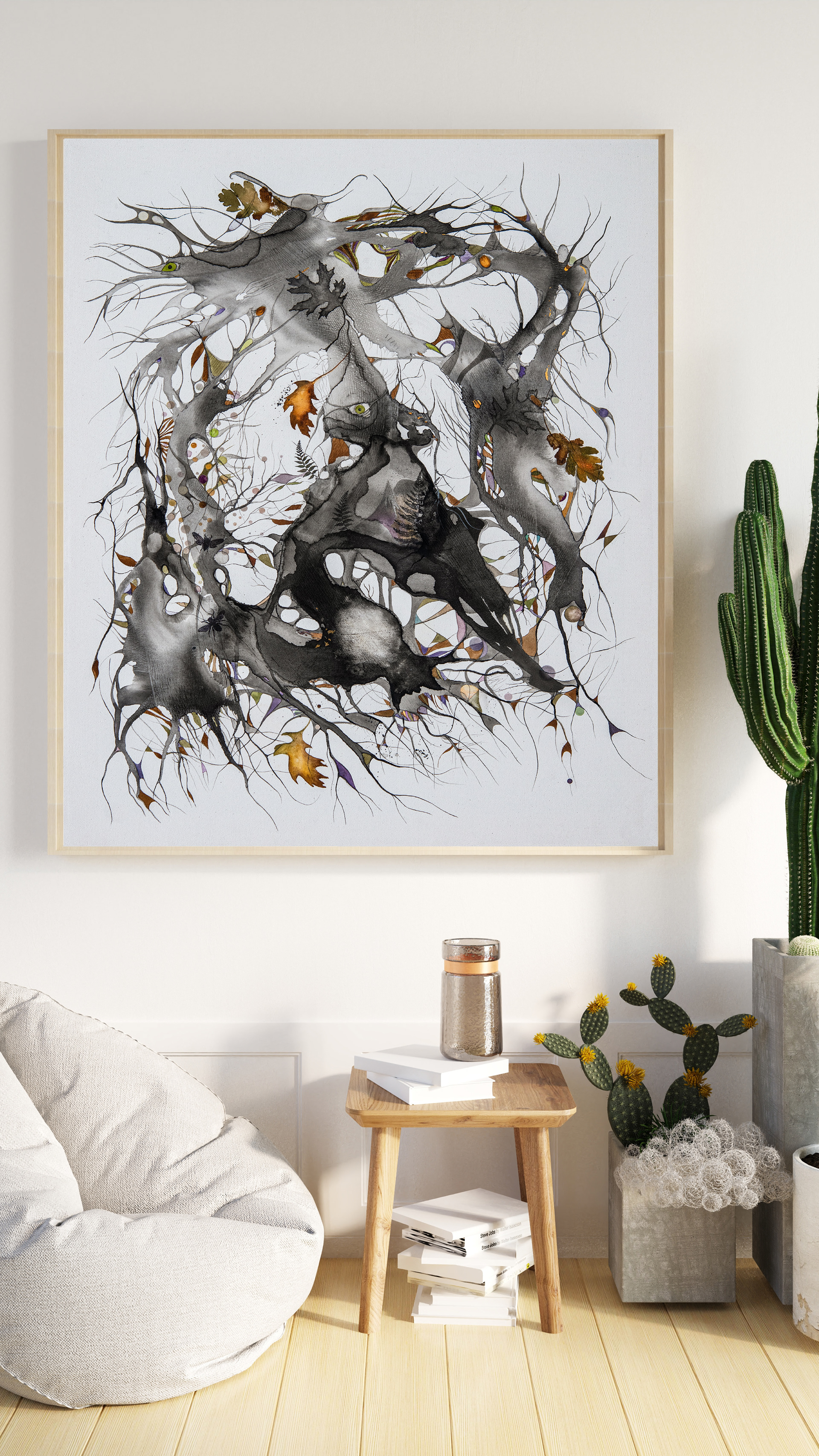
Drift
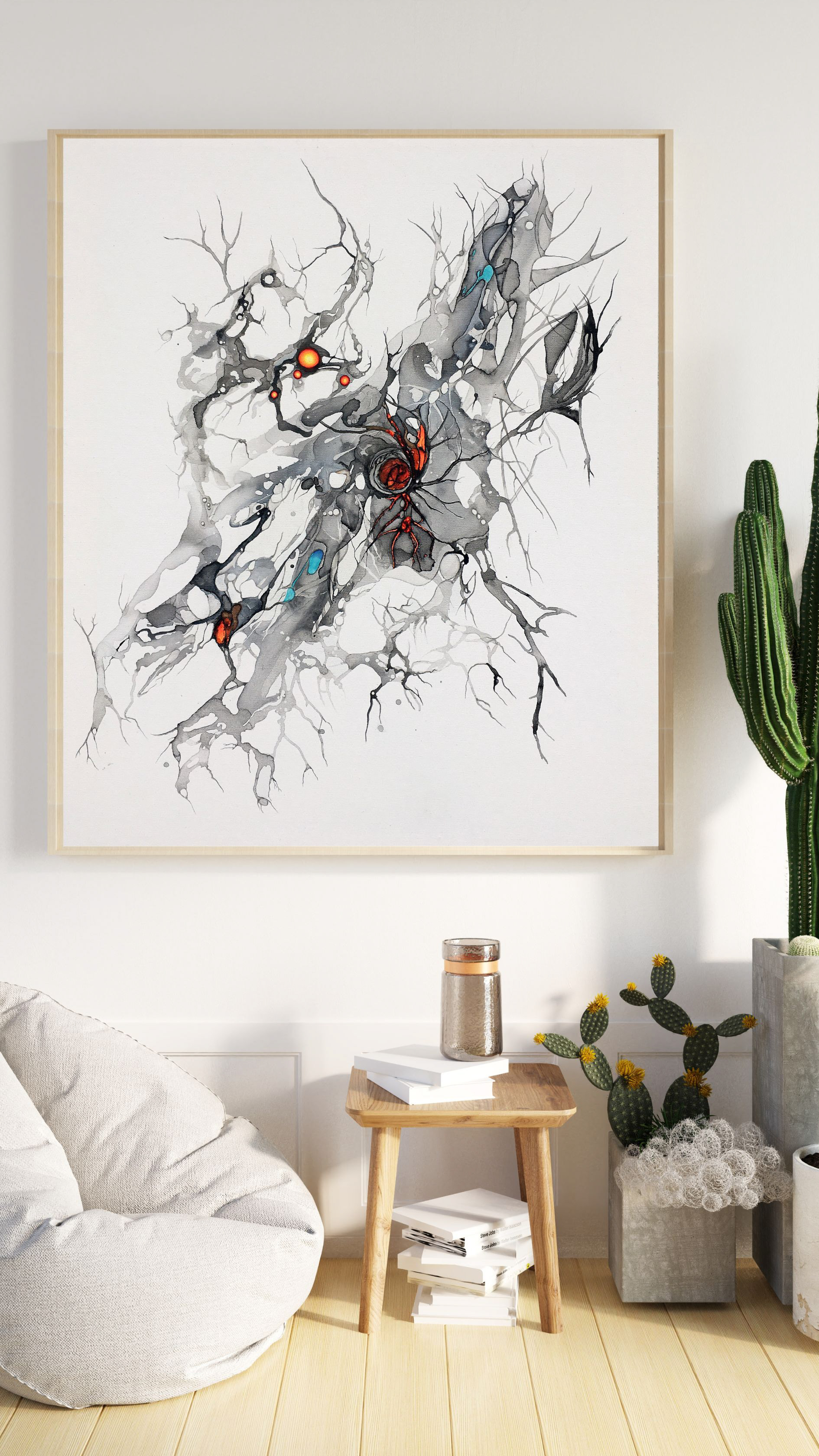
Agni
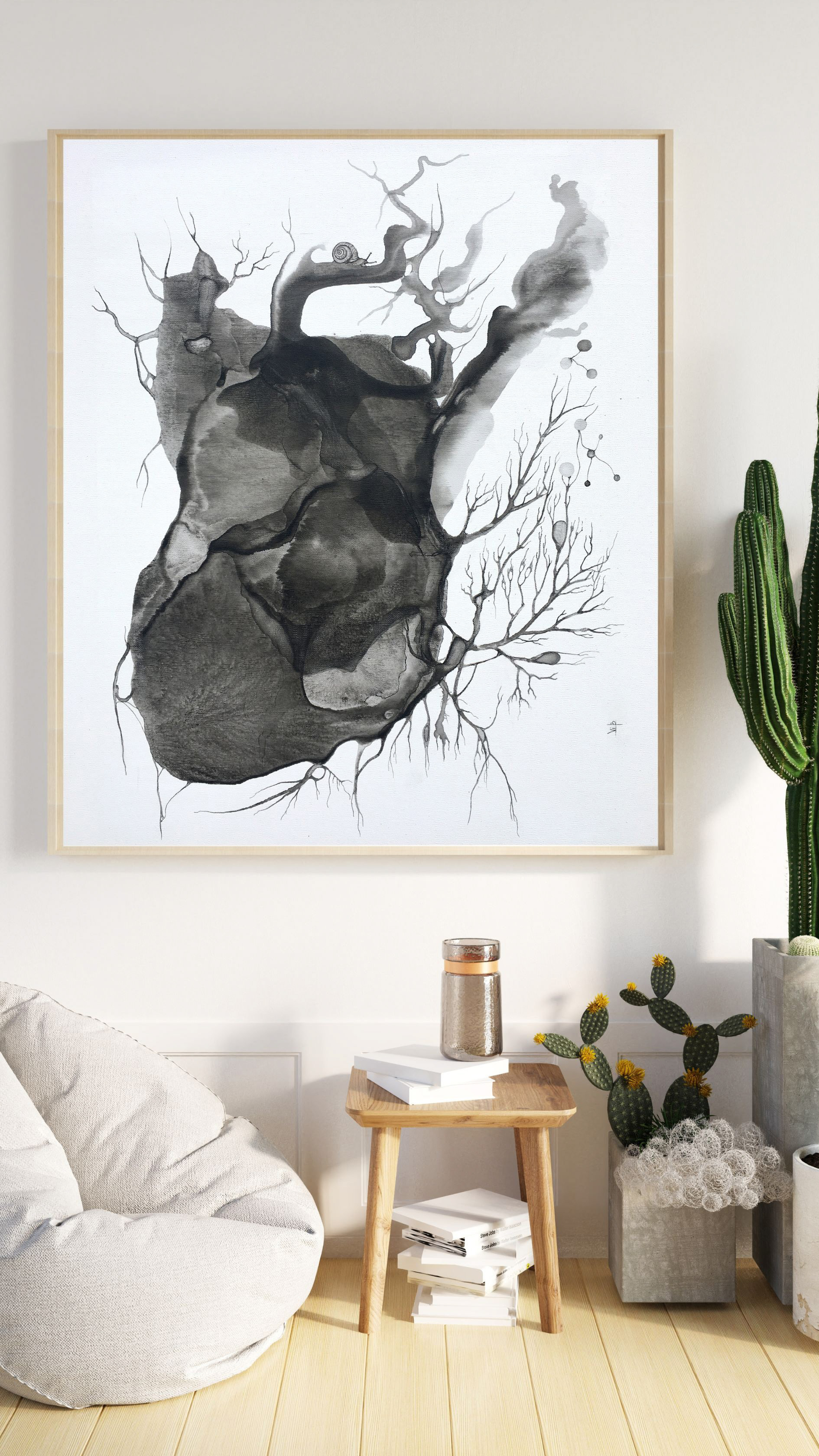
Vessel
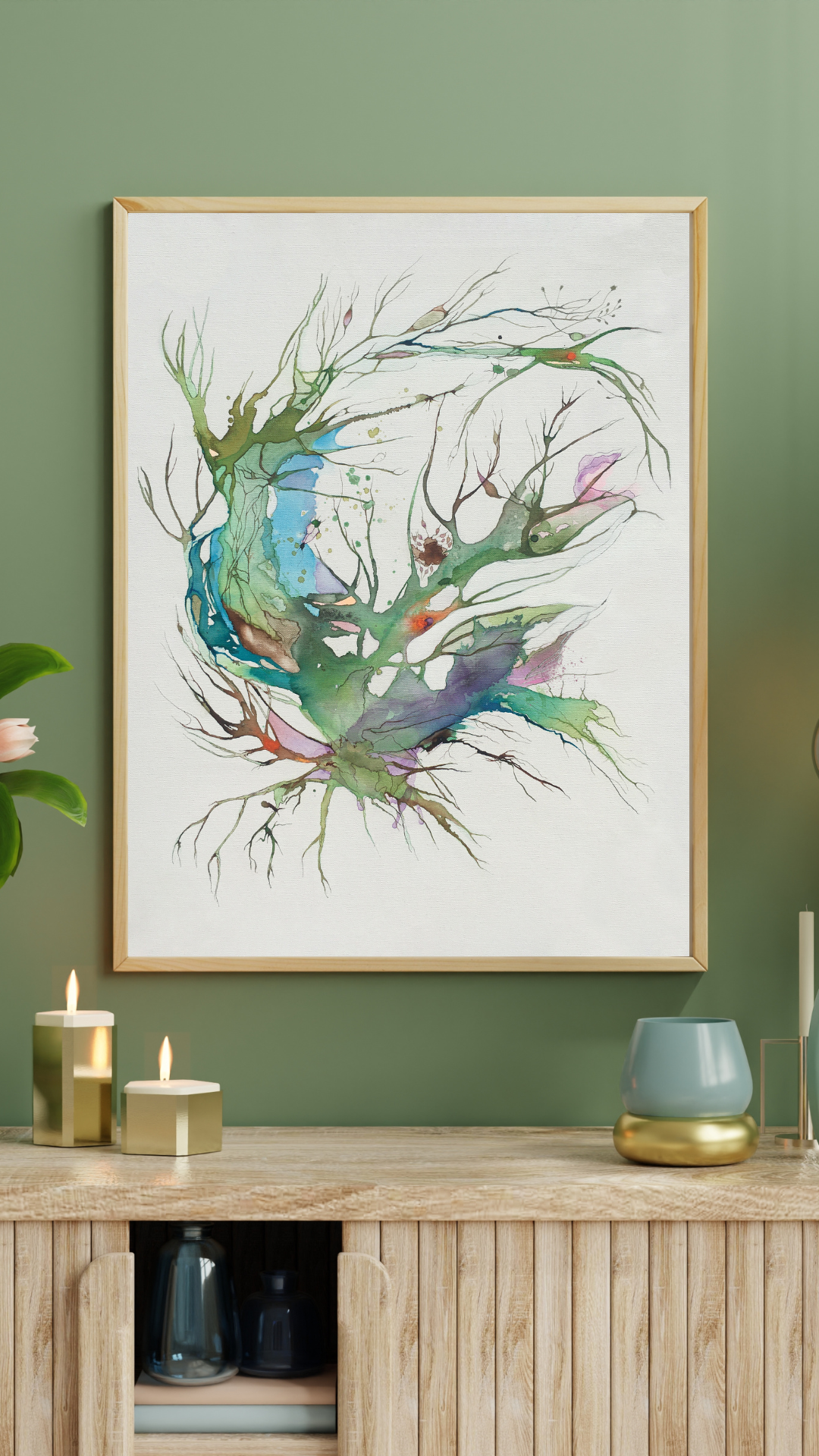
Verdant Alchemy

Waterborn
VIDEO